The administration of President Donald Trump has announced a sweeping package of U.S. arms sales to Taiwan valued at more than $11 billion, marking the largest single transfer of American military equipment to the self-governing island in history.
The announcement immediately triggered a sharp rebuke from China, which accused Washington of violating diplomatic agreements and pushing the Taiwan Strait closer to military confrontation.
Largest-Ever U.S. Weapons Sale Signals Escalation in Cross-Strait Tensions
The weapons package, disclosed late Wednesday by the U.S. State Department, includes medium-range missiles, advanced rocket systems, artillery, drones, and military software, dramatically expanding Taiwan’s defensive capabilities at a time of heightened Chinese military pressure. The move underscores a more assertive U.S. posture toward Beijing during Trump’s second term, even as tensions between the world’s two largest economies continue to fluctuate over trade, technology, and security.
Details of the Arms Package
If approved by Congress, the eight arms sales agreements will total $11.15 billion, according to Taiwan’s Ministry of National Defense, surpassing the $8.4 billion in total arms sales approved during President Joe Biden’s four-year Democratic administration.
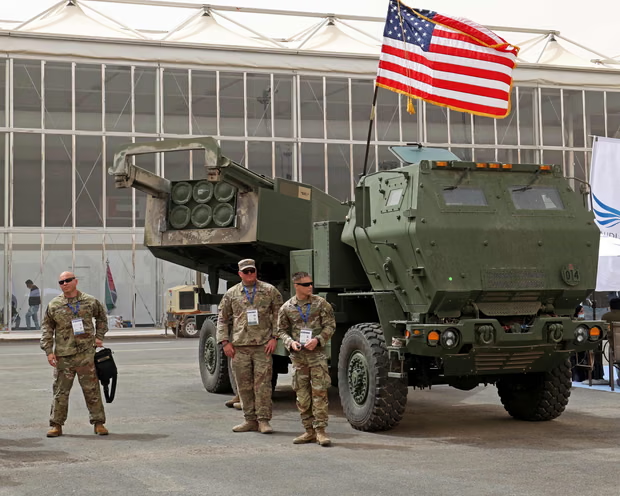
At the core of the package are 82 High Mobility Artillery Rocket Systems (HIMARS) and 420 Army Tactical Missile Systems (ATACMS), valued at more than $4 billion.
These systems widely credited with changing battlefield dynamics in Ukraine during its war with Russia would significantly enhance Taiwan’s ability to strike targets at medium range and deter amphibious or missile assaults.
The deal also includes:
60 self-propelled howitzer systems and related equipment, worth over $4 billion
Unmanned aerial systems (drones) valued at more than $1 billion
Military software and command systems exceeding $1 billion
Javelin and TOW anti-tank missiles totaling more than $700 million
Helicopter spare parts valued at $96 million
Harpoon missile refurbishment kits worth $91 million
The State Department said the proposed sales would help Taiwan modernize its armed forces and maintain a “credible defensive capability” in line with U.S. national security interests.
Strategic Timing and Political Context
The announcement came during a nationally televised address by President Trump, though the president made no direct mention of Taiwan or China in his remarks. Instead, the arms package was quietly unveiled through formal notifications to Congress, a process required under U.S. law.
U.S.–China relations during Trump’s second term have been marked by periodic flare-ups, particularly over tariffs, technology restrictions, and military activity in the Indo-Pacific.
China has stepped up air and naval operations near Taiwan, conducting frequent drills that simulate blockades and amphibious landings, raising fears of miscalculation or conflict.
Analysts say the arms package sends a clear message: Washington intends to strengthen Taiwan’s deterrence even as it avoids formally recognizing the island as a sovereign state.
China’s Reaction: “Playing with Fire”
China responded swiftly and angrily. The Foreign Ministry accused the United States of violating diplomatic commitments and undermining regional stability.
“This gravely infringes upon China’s sovereignty and territorial integrity,” said Foreign Ministry spokesperson Guo Jiakun, adding that the arms sale would turn Taiwan into a “powder keg.”
Guo accused Taiwan’s leadership of pursuing independence “through force” and warned that U.S. support would ultimately backfire.
“Using Taiwan to contain China will not succeed,” he said. “This will only accelerate the Taiwan Strait toward a dangerous situation of military confrontation and war.”
Beijing has repeatedly vowed to reunify Taiwan with the mainland, by force if necessary, and views any foreign military assistance to the island as a direct provocation.
The Legal Framework: Why the U.S. Can Sell Arms to Taiwan
Despite severing formal diplomatic relations with Taiwan in 1979, the United States remains legally obligated to assist the island’s defense under the Taiwan Relations Act (TRA). The law requires Washington to provide Taiwan with arms of a defensive character and to maintain the capacity to resist coercion against the island.
This framework often described as “strategic ambiguity” has long sought to deter both a Chinese invasion and a unilateral declaration of independence by Taiwan.
However, as China’s military power has grown, arms sales to Taiwan have become increasingly contentious, with Beijing arguing that such transfers violate past U.S.– China communiqués.
Taiwan Welcomes the Deal
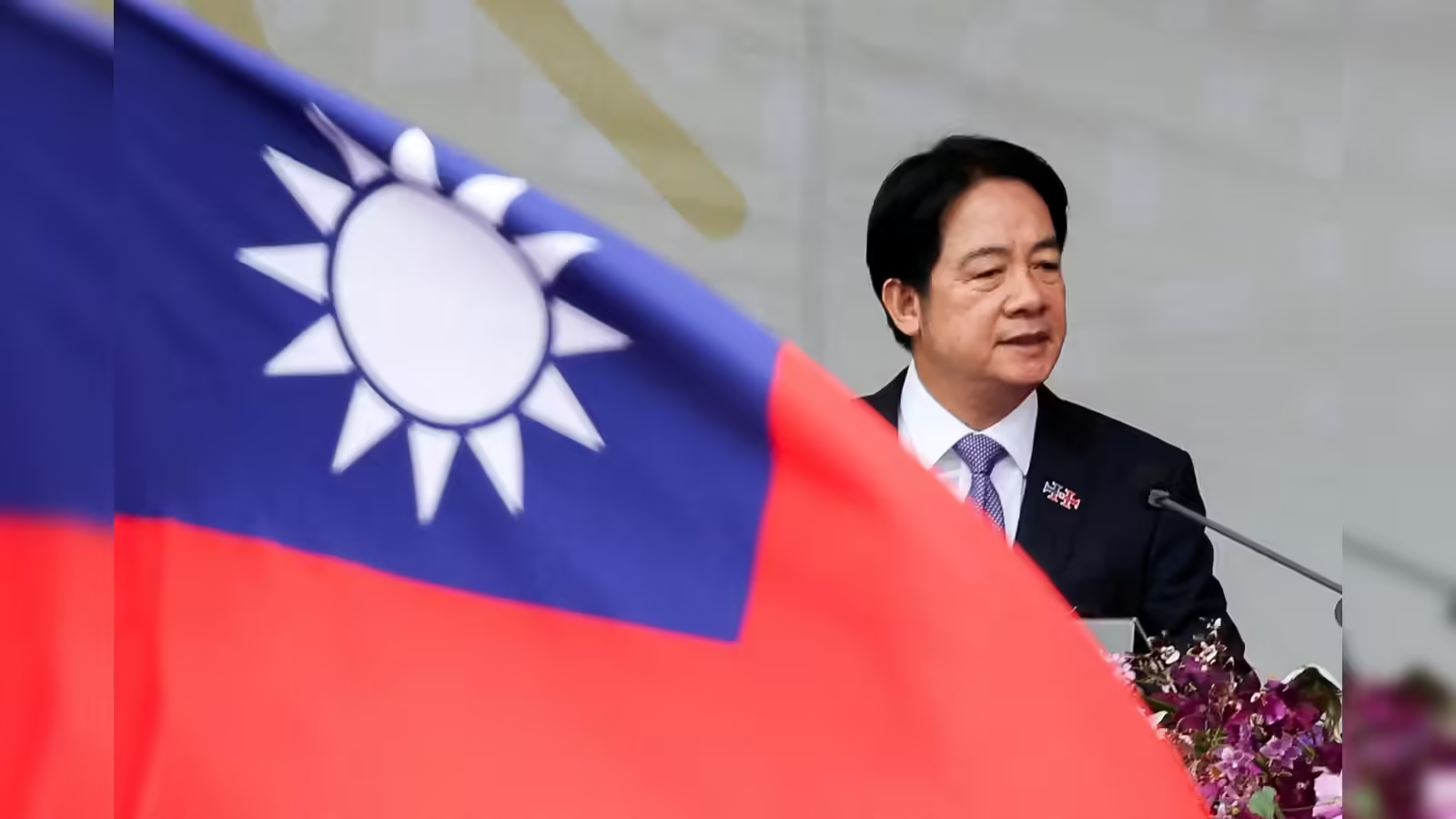
Taiwan’s government reacted positively, thanking Washington for its continued support.
In a statement Thursday, Taiwan’s Defense Ministry said the arms sale would help ensure the island maintains “sufficient self-defense capabilities” and provide a strong deterrent against aggression.
“Strengthening Taiwan’s defense is the foundation for maintaining regional peace and stability,” the ministry said.
Foreign Minister Lin Chia-lung echoed that sentiment, calling U.S. support essential to preventing conflict in the Taiwan Strait, the narrow body of water separating Taiwan from mainland China.
Taiwan’s Growing Defense Commitment
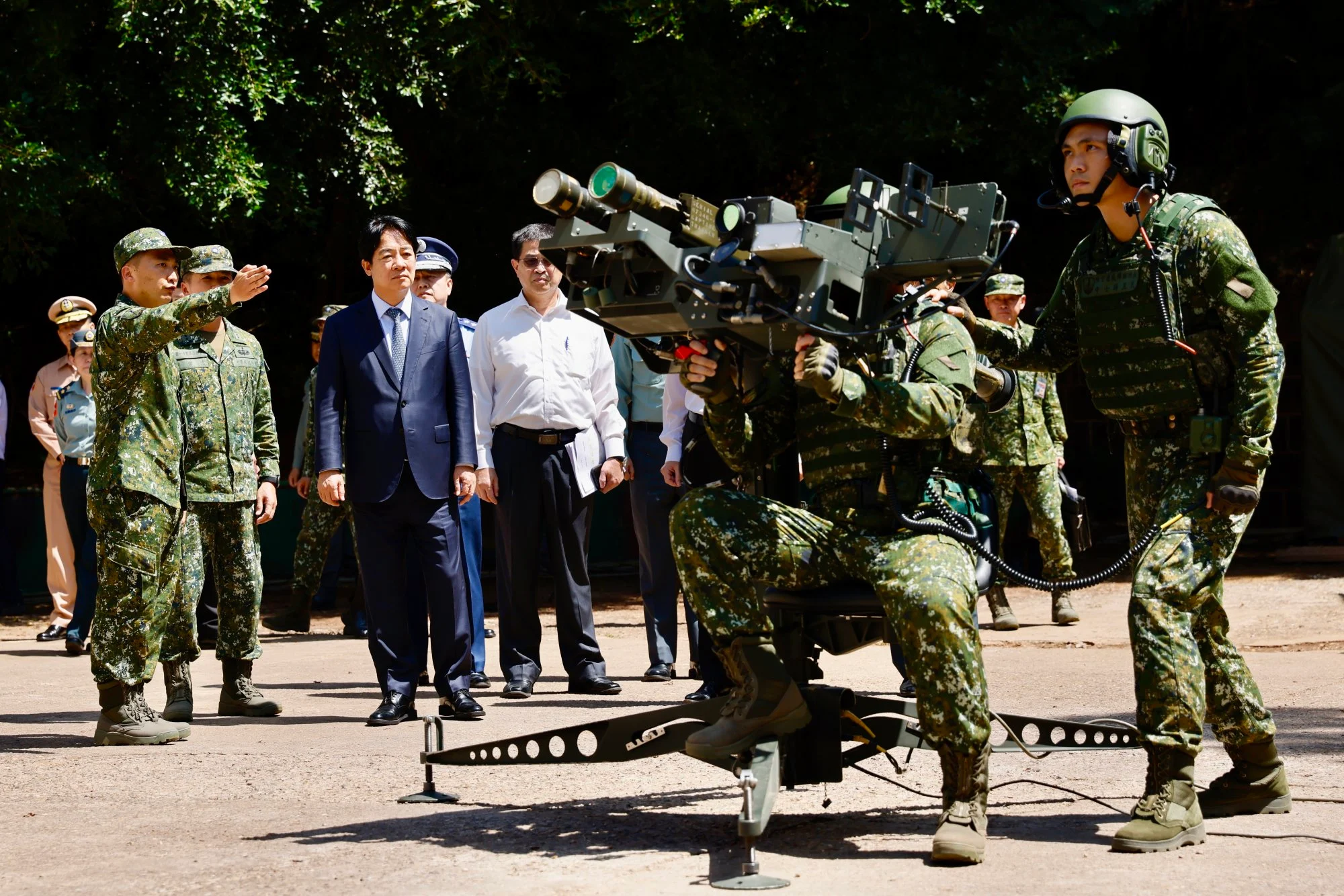
The arms package comes as Taiwan significantly ramps up its own military spending. Taipei has pledged to raise defense expenditures to 3.3% of GDP next year and to 5% by 2030, reflecting growing concern over China’s intentions.
President Lai Ching-te recently announced a $40 billion special defense budget, to be spread over eight years starting in 2026. The funds will support arms purchases and domestic projects, including the construction of a sophisticated missile defense network known as “Taiwan Dome.”
Congressional and Legislative Backing
The arms sales were foreshadowed in provisions included in the National Defense Authorization Act (NDAA), which Congress passed this week and which Trump is expected to sign into law.
The legislation emphasizes countering China’s military expansion and strengthening partnerships with U.S. allies in the Indo-Pacific. China’s embassy in Washington denounced the NDAA, accusing the United States of portraying China unfairly as an aggressor.
Broader Regional Implications
Security analysts warn that while the arms sale may strengthen deterrence, it also risks escalating tensions in one of the world’s most sensitive flashpoints.
The Taiwan Strait is a critical artery for global trade, with trillions of dollars in goods passing through each year. Any conflict could have catastrophic economic consequences, disrupting supply chains and drawing in regional and global powers.
China has responded to previous arms sales with military drills, sanctions on U.S. defense firms, and diplomatic pressure, and similar actions are widely expected following this announcement.
A Defining Moment in U.S.–China Relations
The record-breaking arms package signals that Trump’s second-term foreign policy, despite rhetoric about avoiding overseas entanglements, is willing to take bold steps when core strategic interests are at stake.
For Taiwan, the deal represents a critical reinforcement of its defenses at a moment of growing uncertainty. For China, it is another sign that Washington is prepared to push back against Beijing’s regional ambitions.
As competition between the United States and China intensifies, the Taiwan question remains one of the most volatile and potentially consequential issues in global geopolitics.