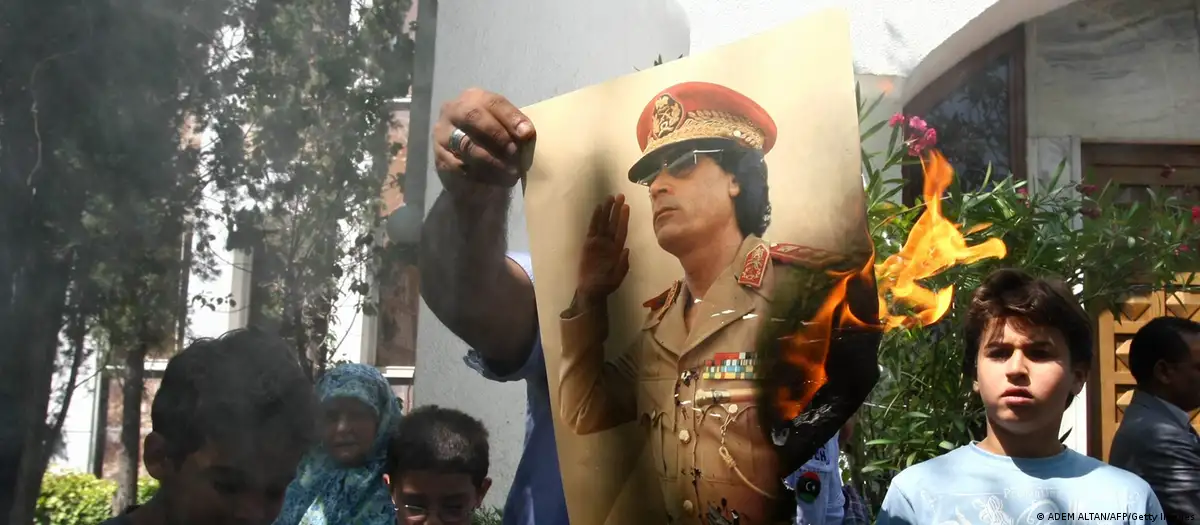
On October 20, 2011, Libyans and much of the world watched as the 42-year rule of Moammar al-Gadhafi came to a violent and symbolic end.
“We announce to the world that Gadhafi has been killed at the hands of the revolution,” Abdul Hafiz Ghoga, spokesman for Libya’s National Transitional Council (NTC), declared. “It is the end of tyranny and dictatorship.”
The Fall of a Dictator and the Promise of a New Beginning
The moment was widely seen as a turning point — not only for Libya, but for the wave of uprisings sweeping the Arab world. After decades of authoritarian rule, Libyans dared to hope that democracy, accountability, and national unity were finally within reach.
More than a decade later, those hopes remain largely unfulfilled.
Roots of the Uprising
The 2011 uprising did not erupt in isolation. It was part of the broader Arab Spring, inspired in part by the popular revolt in neighboring Tunisia that forced President Zine El Abidine Ben Ali from power weeks earlier.
In Libya, long-simmering frustrations boiled over. Food prices were rising, youth unemployment was widespread, and political repression was severe. The country had no free press, no meaningful political parties, and no independent civil society.
“There were strong economic grievances, but also clear political demands,” said Hager Ali, a research fellow at the Hamburg-based GIGA Institute for Middle East Studies. “Libyans wanted democracy, dignity, and an end to systematic human rights abuses.”
One of the most painful symbols of those abuses was the 1996 Abu Salim prison massacre in Tripoli, where an estimated 1,200 to 1,700 inmates were killed by security forces. Families of the victims had demanded accountability for years, only to be met with silence and intimidation.
NATO Intervention and the Collapse of the Regime
As protests spread in early 2011, Gadhafi responded with brutal force, vowing to hunt down opponents “house by house.” Fearing mass civilian casualties, the United Nations Security Council authorized military intervention in March 2011 to protect civilians.
NATO-led airstrikes targeted Libyan military assets, significantly weakening Gadhafi’s forces and tipping the balance in favor of rebel groups. By August, opposition fighters had entered Tripoli, forcing Gadhafi to flee the capital.
After weeks on the run, he was captured near his hometown of Sirte, roughly 450 kilometers east of Tripoli. Video footage showed him bloodied and disoriented after being pulled from a drainage pipe where he had sought refuge. He was killed shortly afterward by rebel fighters, an extrajudicial execution that shocked the world.
Early Optimism and Early Warnings
In the immediate aftermath, Libya was swept by optimism. Flags replaced portraits of Gadhafi, exiles returned home, and talk of elections and national reconciliation filled public squares.
Yet even then, international observers urged caution. “The road ahead for Libya and its people will be difficult and full of challenges,” then-UN Secretary-General Ban Ki-moon warned. “Libyans can only realize the promise of the future through national unity and reconciliation.”
That unity proved elusive.
Gadhafi’s Legacy of Fragmentation
Gadhafi left behind a state hollowed out by decades of deliberate institutional sabotage. He had ruled through patronage, repression, and division, weakening formal institutions while empowering loyal militias and foreign mercenaries.
“He kept the lower ranks of the Libyan army out of power and relied heavily on rival security structures,” Ali said. “That strategy created deep rivalries that survived long after his death.”
There was no functioning civilian political culture capable of absorbing disagreements or resolving conflicts peacefully. When the common enemy disappeared, so did the fragile alliances that had united disparate rebel groups.
Descent Into Civil War
By 2014, Libya had slipped into a second civil war. Rival governments emerged — one based in Tripoli in the west, the other in Tobruk in the east. Each claimed legitimacy, and each relied on armed groups to enforce its authority.
The conflict quickly attracted foreign involvement. Turkey, Russia, Egypt, and the United Arab Emirates backed opposing sides, turning Libya into a proxy battleground.
Mercenaries flooded the country. Russian-linked Wagner forces supported eastern commander Khalifa Haftar, while Turkey provided military backing to the Tripoli-based government. Foreign-financed fighters remain entrenched in Libya to this day.
Competing Foreign Interests
Foreign intervention has been driven by overlapping and often conflicting interests. Turkey sought to assert its claims over Eastern Mediterranean gas reserves by aligning with the internationally recognized government in Tripoli. Egypt and the UAE viewed Haftar as a bulwark against Islamist movements, particularly the Muslim Brotherhood.
European governments, meanwhile, focused largely on migration. Libya became a key departure point for migrants attempting dangerous sea crossings to Europe, prompting EU states to prioritize border control over political reform.
“These external agendas have complicated every attempt at national reconciliation,” analysts say.
International Mediation and Missed Deadlines
The United Nations has repeatedly tried to broker peace. Multiple special envoys sought to unify Libya’s political institutions and organize elections.
Germany played a prominent role, hosting two international Libya conferences in Berlin in 2020 and 2021 aimed at reducing foreign interference and reviving a political process.
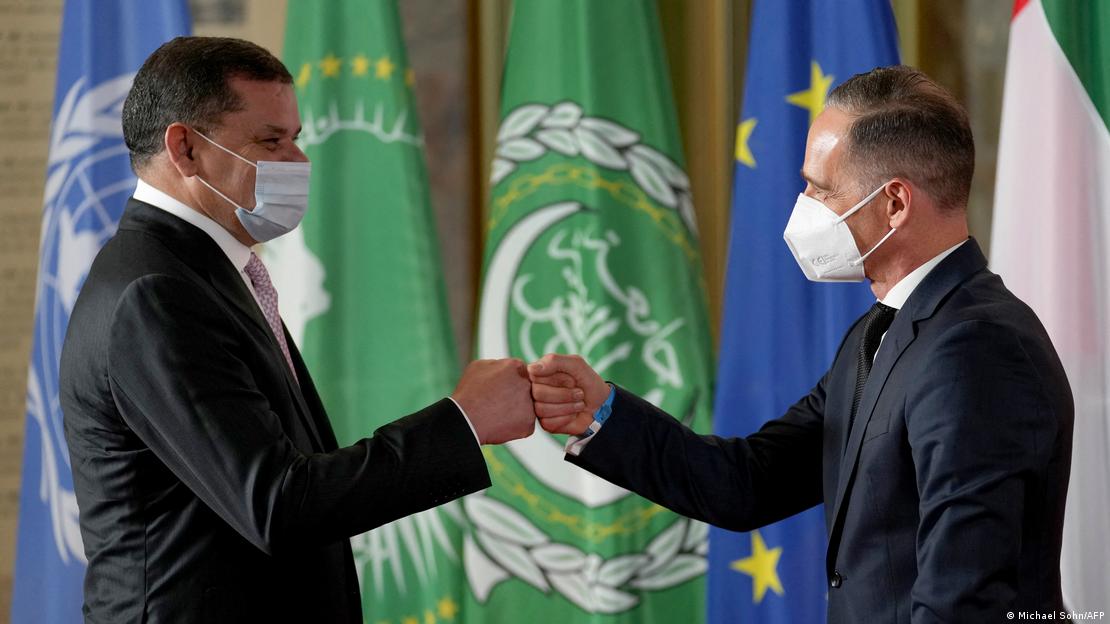
In February 2021, Libyan factions agreed on Abdul Hamid Dbeibeh as interim prime minister, tasked with guiding the country toward presidential and parliamentary elections scheduled for December that year.
Those elections were postponed and then postponed again.
Elections Without Authority
Repeated election delays have deepened public frustration and eroded trust in political institutions. Armed groups continue to exert influence, and no unified command controls Libya’s military forces.
“One of the biggest risks is that armed groups simply ignore election outcomes they don’t like,” Ali warned. “Control over the army and security forces remains unresolved.”
Militias loyal to different political factions could still override civilian authority, undermining any democratic process.
A Decade On, a Fragile Future
Thirteen years after Gadhafi’s death, Libya remains divided, unstable, and heavily influenced by foreign powers. While violence has subsided compared to the height of the civil war, the underlying causes of conflict remain unresolved.
The country is rich in oil and gas, yet basic services are unreliable. Young Libyans face limited opportunities, and many see emigration as their best hope.
Democracy, stability, and sovereignty — the aspirations that fueled the 2011 uprising, remain distant goals.
“The revolution removed a dictator,” Ali said, “but it did not produce a state.”
An Unfinished Chapter
Libya’s story since 2011 is not one of simple failure, but of unfinished transformation. The fall of Gadhafi ended an era of personal rule, but it also exposed the fragility of institutions long kept weak by design.
As parliamentary elections are once again postponed, Libyans continue to wait for the moment when political authority flows from ballots rather than bullets.
More than a decade after the world declared Libya free, the country is still struggling to define what freedom truly means.