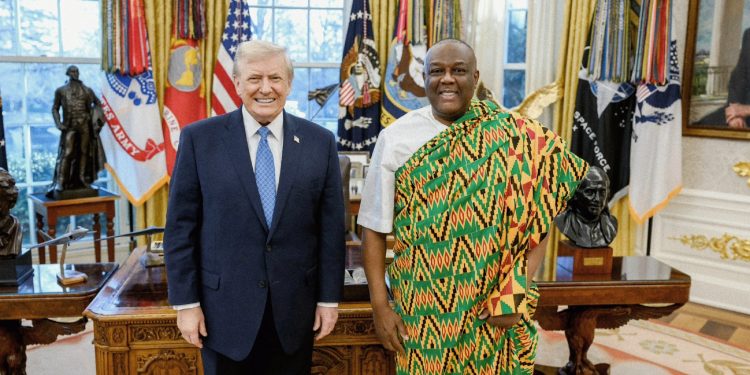
Ghana’s newly appointed Ambassador to the United States, Victor Emmanuel Smith, has formally begun his diplomatic assignment in Washington after presenting his credentials to U.S. President Donald J. Trump at the White House.
The presentation of credentials, held at the Oval Office, is a key diplomatic ritual that officially recognizes an ambassador as the accredited representative of their country and marks the start of their full engagement with the host government.
Formal Commencement of Diplomatic Duties
Ambassador Smith was among 15 newly appointed envoys accredited to the United States during the ceremony. Notably, he was the first ambassador received by President Trump on the day, a detail Ghanaian officials say underscores the importance Accra attaches to its relationship with Washington and the strategic value it places on sustained engagement with the United States.
A Warm and Symbolic Reception
According to officials familiar with the meeting, President Trump greeted the Ghanaian envoy warmly, striking a relaxed and cordial tone during the brief encounter. At one point, the U.S. president reportedly remarked, “Look at this good-looking guy,” prompting light laughter in the room and easing the formality of the occasion.
While largely ceremonial, such moments are often viewed by diplomats as early indicators of personal rapport and goodwill, which can shape the tone of future interactions between leaders and their representatives.
Message From President John Dramani Mahama
During the credential presentation, Ambassador Smith delivered a formal message from Ghana’s President, John Dramani Mahama, reaffirming Ghana’s commitment to strengthening its long-standing bilateral relationship with the United States.
The message emphasized shared democratic values, mutual respect, and a desire to expand cooperation across political, economic, and social spheres. Ambassador Smith highlighted Ghana’s enduring reputation as one of Africa’s most stable democracies and a consistent partner of the United States in West Africa.
President Mahama’s message also underscored Ghana’s interest in reinvigorating diplomatic engagement at a time of shifting global alliances, heightened geopolitical competition, and renewed international focus on Africa’s economic potential.
Ghana–U.S. Relations: A Longstanding Partnership
Ghana and the United States have maintained close relations since Ghana gained independence from Britain in 1957. Ghana was the first sub-Saharan African country to achieve independence, and its early embrace of democratic governance helped shape its long-term partnership with Washington.
Over the decades, the relationship has expanded to include development assistance, security cooperation, trade, education, and people-to-people exchanges. The United States remains one of Ghana’s most important bilateral partners, providing development support through agencies such as USAID, engaging in military cooperation, and serving as a major destination for Ghanaian exports and diaspora communities.
Ghana, for its part, has positioned itself as a reliable regional partner in a West African sub-region facing growing security challenges linked to terrorism, political instability, and economic pressures.
Economic Diplomacy at the Center
Economic engagement formed a central pillar of Ambassador Smith’s discussions during the credential ceremony. He emphasized Ghana’s interest in expanding trade, investment, and economic diplomacy with the United States, particularly in ways that align with Ghana’s development priorities.
“Ghana serves as an entry point to a sub-regional market of over 400 million people and a continental market of more than 1.4 billion people,” Ambassador Smith said, highlighting the country’s strategic geographic and economic position.
He described Ghana as a gateway for American companies seeking to expand into Africa, citing the country’s political stability, improving infrastructure, and business-friendly reforms as competitive advantages.
Ghana and the African Continental Free Trade Area
A key element of Ghana’s economic pitch is its role as host of the Secretariat of the African Continental Free Trade Area (AfCFTA), one of the most ambitious trade initiatives in modern history.
The AfCFTA aims to create a single market for goods and services across Africa, reduce trade barriers, and boost intra-African commerce. By hosting the Secretariat in Accra, Ghana has positioned itself at the heart of continental trade policy and coordination.
Ambassador Smith told U.S. officials that Ghana’s AfCFTA role enhances its appeal as a base for multinational companies seeking access not just to Ghana’s domestic market, but to Africa as a whole.
Priority Sectors for U.S.–Ghana Cooperation
Ambassador Smith outlined several priority sectors where Ghana is seeking deeper engagement with U.S. companies and investors. These include manufacturing, agribusiness, energy, technology, and services.
Ghana’s government has prioritized industrialization, value-added manufacturing, and agricultural modernization as part of its long-term economic strategy. Officials believe partnerships with U.S. firms can bring capital, technical expertise, and innovation to these sectors.
Energy cooperation, particularly in renewables and natural gas, is also seen as a key growth area, while technology and digital services are increasingly central to Ghana’s youth-driven economy.
Invitation for a Presidential Visit
In a diplomatic gesture aimed at reinforcing bilateral ties, Ambassador Smith extended an invitation to President Trump to visit Ghana. While no visit has been announced, such high-level engagements are often seen as catalysts for deeper cooperation and renewed political momentum.
Ghana has previously leveraged presidential visits including former U.S. President Barack Obama’s 2009 trip to elevate its international profile and strengthen economic and diplomatic relationships.
Domestic and Global Context
Ambassador Smith’s arrival in Washington comes amid shifting global dynamics, including renewed great-power competition, debates over trade protectionism, and increased international focus on Africa’s role in global supply chains.
For Ghana, maintaining strong ties with the United States is viewed as essential to navigating these changes while preserving policy autonomy and economic growth.
At the same time, the Trump administration’s emphasis on bilateral trade, national interests, and security partnerships presents both opportunities and challenges for African diplomats seeking to advance cooperation.
The Role of the Ghanaian Diaspora
Another important dimension of Ghana–U.S. relations is the large and influential Ghanaian diaspora in the United States. Diaspora communities contribute significantly to Ghana’s economy through remittances, investment, and skills transfer.
Ambassador Smith is expected to engage closely with diaspora organizations, business leaders, and cultural groups as part of his mandate to strengthen people-to-people ties.
A New Phase of Engagement
The presentation of credentials marks a significant milestone in Ambassador Smith’s diplomatic career and signals the beginning of a renewed phase of engagement between Ghana and the United States.
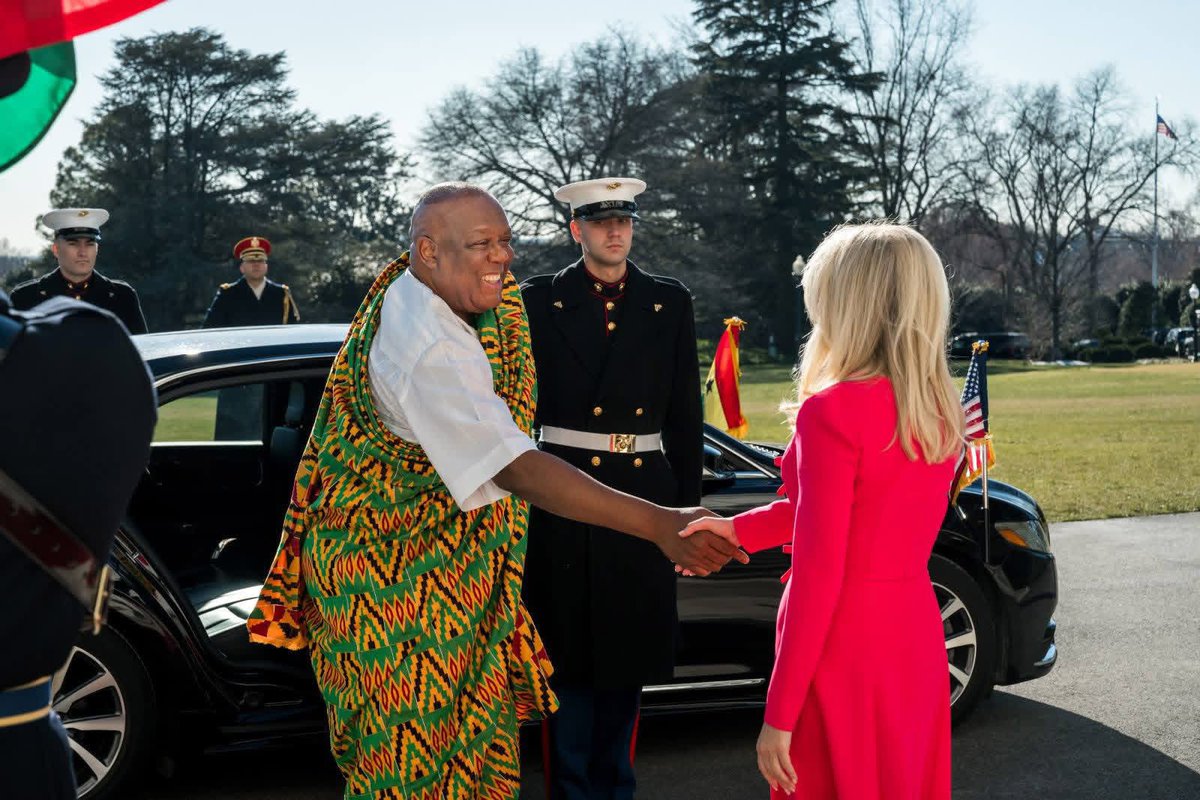
Ghanaian officials say his tenure will focus on strengthening political dialogue, advancing economic diplomacy, promoting investment, and deepening cultural and educational exchanges.
As global attention increasingly shifts toward Africa’s economic and strategic importance, both Ghana and the United States appear eager to build on their historic partnership and adapt it to emerging realities.