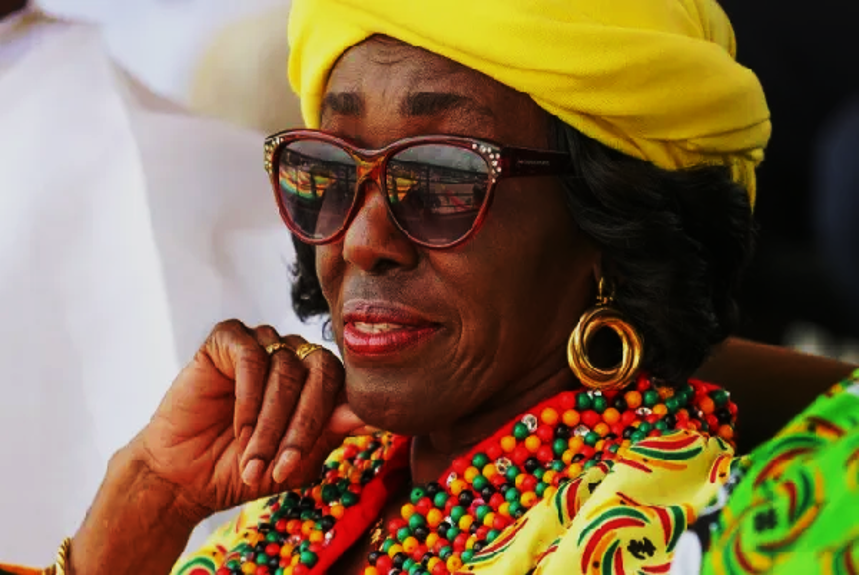
Accra, Ghana — Ghana’s former First Lady, Nana Konadu Agyeman-Rawlings, has passed away at the age of 76, following a brief illness, presidential spokesperson Felix Kwakye Ofosu confirmed on Thursday morning.
Agyeman-Rawlings was the widow of Jerry John Rawlings, Ghana’s longest-serving leader, who led two coups before being twice elected president in multiparty elections.
She was also a prominent politician, women’s rights advocate, and founder of the 31st December Women’s Movement, aimed at empowering women and fostering community development. The movement was named after the date of her husband’s second coup in 1981.
Born in November 1948 in Cape Coast, she hailed from a middle-class family and later attended the prestigious Achimota School in Accra, where she met Jerry Rawlings.
Unlike her husband, she pursued higher education, studying art and textiles, while Rawlings joined the air force, eventually becoming a flight lieutenant. The couple married in 1977 and had four children, including Dr. Zanetor Agyeman-Rawlings, who is now an NDC Member of Parliament.
As first lady, Agyeman-Rawlings played a vital advisory role to her husband and became a leading figure in Ghanaian politics and social advocacy.
Her women’s movement, initially seen as aligned with the National Democratic Congress (NDC), expanded opportunities for women nationwide, particularly in underserved regions, and influenced national legislation, including the 1989 law guaranteeing inheritance rights for women and children and gender equality provisions in the 1992 constitution.
She also pursued her own political ambitions, running unsuccessfully for the NDC’s presidential candidacy in 2012.
Following news of her death, her family formally notified former President John Mahama, who leads the National Democratic Congress, and tributes have flooded social media.
Ghana’s parliament has adjourned sessions in her honor as the nation prepares to mourn one of its most influential political figures and a tireless advocate for women’s empowerment.
Ghana’s Political Landscape
To fully understand the significance of Nana Konadu Agyeman-Rawlings’ life and work, it is important to consider the broader political context of Ghana during the late 20th century.
Following independence in 1957 under Kwame Nkrumah, Ghana experienced periods of instability marked by coups, economic downturns, and shifting governance systems. By the late 1970s and early 1980s, the country was grappling with inflation, shortages of basic goods, and widespread dissatisfaction with political leadership.
It was within this environment that Jerry Rawlings rose to power, ushering in a revolutionary period that sought to address corruption and economic decline. As the political climate evolved, so too did the role of the First Lady, with Agyeman-Rawlings emerging as an influential figure in shaping social policy and grassroots mobilization.
Her work cannot be separated from this broader national transformation, as she operated in a period when Ghana was redefining its political identity and institutional structures.
The Role of First Lady and Political Influence
During her years as First Lady, Nana Konadu Agyeman-Rawlings helped redefine what the role could mean in Ghana. Traditionally viewed as largely ceremonial, the position took on a more active and policy-oriented dimension under her leadership.
She became deeply involved in national discussions on social development, education, and women’s empowerment. Her advisory role extended beyond informal influence, as she actively engaged with policymakers, community leaders, and international organizations.
Her visibility and activism contributed to a broader acceptance of women as key participants in governance and public life. In a society where gender roles had often limited women’s participation in politics, her prominence challenged longstanding norms and opened new pathways for female leadership.
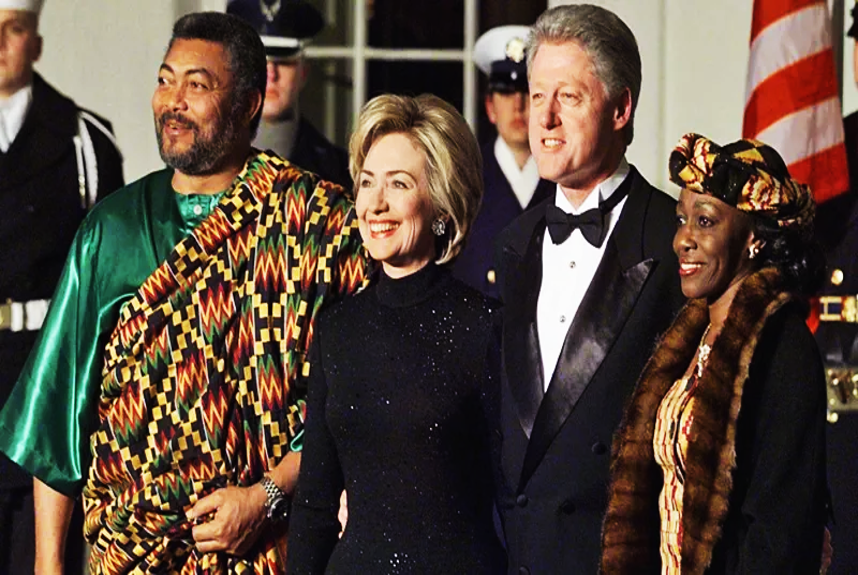
The 31st December Women’s Movement and Grassroots Impact
The 31st December Women’s Movement became one of the most significant vehicles for Agyeman-Rawlings’ advocacy. Established in the early years of her husband’s rule, the organization focused on empowering women through education, vocational training, and access to economic opportunities.
Across rural and urban communities, the movement established daycare centers, health clinics, and income-generating projects. These initiatives were particularly impactful in underserved areas, where access to basic services was limited.
The movement also emphasized literacy and skills development, helping women gain financial independence and improve their quality of life. By integrating social services with advocacy, it created a model for grassroots development that influenced similar initiatives across the region.
However, the organization was not without controversy. Critics argued that its close association with the ruling government gave it political advantages and blurred the line between state and civil society. Supporters, on the other hand, maintained that its achievements in improving women’s lives were undeniable.
Women’s Rights and Legal Reforms
Agyeman-Rawlings’ advocacy extended into the legal sphere, where she played a role in advancing reforms aimed at protecting women and children.
The 1989 inheritance law, which sought to guarantee property rights for women and children, marked a significant shift in a society where customary practices often disadvantaged widows and female heirs. Similarly, the inclusion of gender equality provisions in the 1992 constitution reflected a broader commitment to addressing systemic inequalities.
These reforms were part of a wider movement across Africa to strengthen legal protections for women, but Ghana’s efforts were notable for their scope and impact. Agyeman-Rawlings’ influence helped bring these issues to the forefront of national policy discussions.
Political Ambitions and Intra-Party Dynamics
Despite her achievements as an advocate and public figure, Agyeman-Rawlings also sought to carve out her own political path. Her decision to run for the presidential candidacy of the National Democratic Congress in 2012 marked a significant moment in Ghanaian politics.
Her candidacy highlighted both her ambition and the challenges faced by women in pursuing top political office. While she ultimately did not secure the nomination, her campaign underscored ongoing debates within the NDC about leadership, direction, and generational change.
The attempt also reflected her desire to move beyond the shadow of her husband’s legacy and establish herself as an independent political force.
Family Legacy and Continued Influence
The Rawlings family remains deeply embedded in Ghana’s political landscape. Their daughter, Zanetor Agyeman-Rawlings, has continued the family’s public service tradition as a member of parliament.
This continuity highlights the enduring influence of the Rawlings name in Ghanaian politics, even years after Jerry Rawlings left office. The family’s involvement in public life reflects both their historical significance and their ongoing relevance in shaping national discourse.
Public Reaction and National Mourning
The announcement of Agyeman-Rawlings’ death prompted an outpouring of tributes from across Ghana and beyond. Political leaders, civil society organizations, and ordinary citizens have reflected on her contributions to national development and women’s empowerment.
Former President John Mahama and other members of the National Democratic Congress have paid tribute to her leadership and dedication.
The decision by Ghana’s parliament to adjourn sessions in her honor underscores the significance of her role in the country’s history. National mourning ceremonies are expected to celebrate her life while acknowledging the impact of her work on generations of Ghanaians.
Broader Impact on African Women’s Leadership
Beyond Ghana, Nana Konadu Agyeman-Rawlings’ legacy resonates within the broader context of women’s leadership in Africa.
Her work paralleled that of other influential African women who have pushed for greater representation and equality in political and social spheres. At a time when female political participation was limited in many parts of the continent, her visibility and activism helped challenge barriers and inspire future leaders.
Her contributions to grassroots development, legal reform, and political engagement serve as a case study in how leadership can intersect with advocacy to produce lasting change.
Enduring Legacy
Nana Konadu Agyeman-Rawlings leaves behind a legacy that is both complex and impactful. She was a political actor, a social advocate, and a symbol of women’s empowerment in Ghana.
Her life’s work reflects the intersections of politics, gender, and development in a country navigating significant transitions. While debates about her role and influence continue, there is broad recognition of her contributions to shaping modern Ghana.
As the nation mourns, her legacy endures in the institutions she helped build, the policies she influenced, and the countless lives touched by her advocacy.