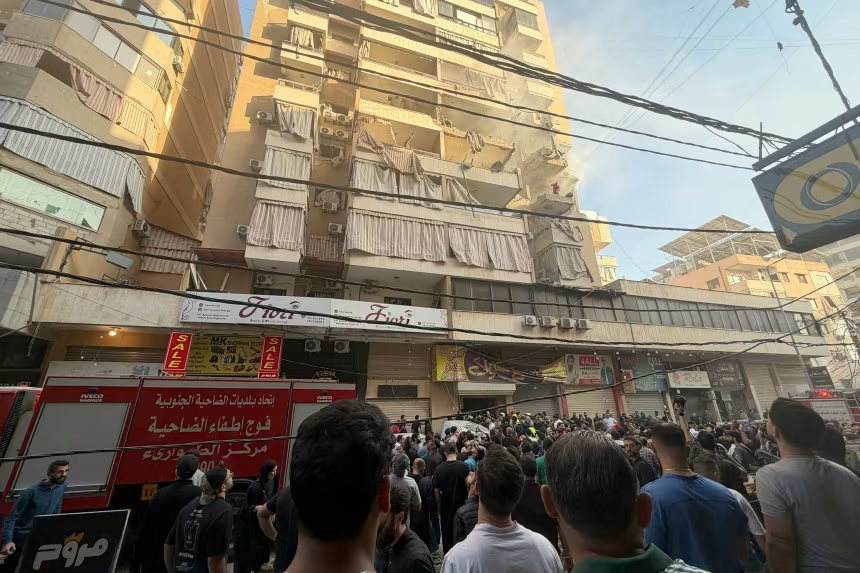
Israel targets Hezbollah chief of staff in a dramatic escalation as the Israeli military launched an air strike in southern Beirut, marking its first attack on the city in several months.
The operation, aimed at Hezbollah’s second-in-command, underscores ongoing tensions in the region despite an established ceasefire.
The Israeli Defense Forces (IDF) confirmed the strike targeted Haytham Ali Tabatabai, who serves as Hezbollah’s chief of staff and has played a key role in the group’s military operations. It remains unclear whether Tabatabai was killed in the attack.
The IDF Damage
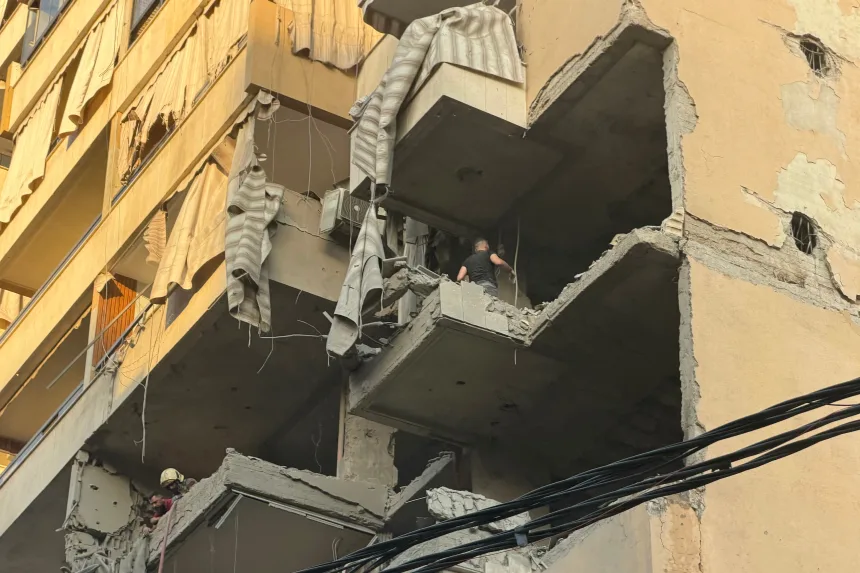
According to Lebanon’s Health Ministry, five civilians lost their lives, and 28 others were injured. Smoke and damage were reported on the upper floors of an apartment building in a densely populated section of southern Beirut.
Israeli Prime Minister Benjamin Netanyahu’s office stated that the operation was conducted following recommendations from both the Minister of Defense and the IDF Chief of Staff. Netanyahu described the strike as a necessary step to neutralize threats posed by Hezbollah’s leadership and protect Israeli citizens.
Defense Minister Israel Katz echoed this position, warning that Israel would continue to respond decisively to any hostile actions, stating that “anyone who raises a hand against Israel, his hand will be cut off.”
The air strike comes amid a history of targeted Israeli operations in Lebanon. In September 2024, a similar strike in southern Beirut resulted in the death of Hezbollah’s long-time leader, Hassan Nasrallah. Israel has also systematically targeted Hezbollah’s communications networks and infrastructure, reducing the operational capacity of the group’s military wing.
While a U.S brokered ceasefire has been in place for over a year, Israeli officials have repeatedly argued that Hezbollah has failed to comply with the terms, including the disarmament of heavy weaponry and withdrawal of personnel from the south of the Litani River. Israel has warned that continued inaction by the Lebanese government could lead to further military operations.
Tabatabai has been on the U.S. terrorist designation list since 2016. The United States Rewards for Justice program has offered up to $5 million for information leading to his capture, citing his leadership of Hezbollah special forces operations in Syria and Yemen.
The Geopolitical Implications
This international designation reflects the broader geopolitical implications of Hezbollah’s activities and the security concerns of both Israel and its allies.
The attack highlights the fragile balance maintained in southern Lebanon and Beirut. Lebanese President Joseph Aoun recently criticized Israel, asserting that the country has shown “no effort to respect any negotiated settlement” and that continued strikes undermine regional stability.
The operation is likely to heighten tensions between Israel and Hezbollah while complicating U.S. efforts to mediate peace in the region.
The targeting of senior leadership figures in densely populated areas raises concerns about civilian casualties and urban conflict. Analysts suggest that Israel’s strategy aims to disrupt Hezbollah’s operational hierarchy, deter future attacks, and maintain strategic pressure on the Lebanese government to enforce disarmament.
Israel targets Hezbollah chief of staff as part of an ongoing campaign to weaken the militant group’s military infrastructure and leadership.
While the strike may temporarily disrupt Hezbollah operations, it also risks escalating tensions in southern Lebanon and northern Israel. The situation remains fluid, and the international community continues to watch closely as both sides navigate the fragile ceasefire.