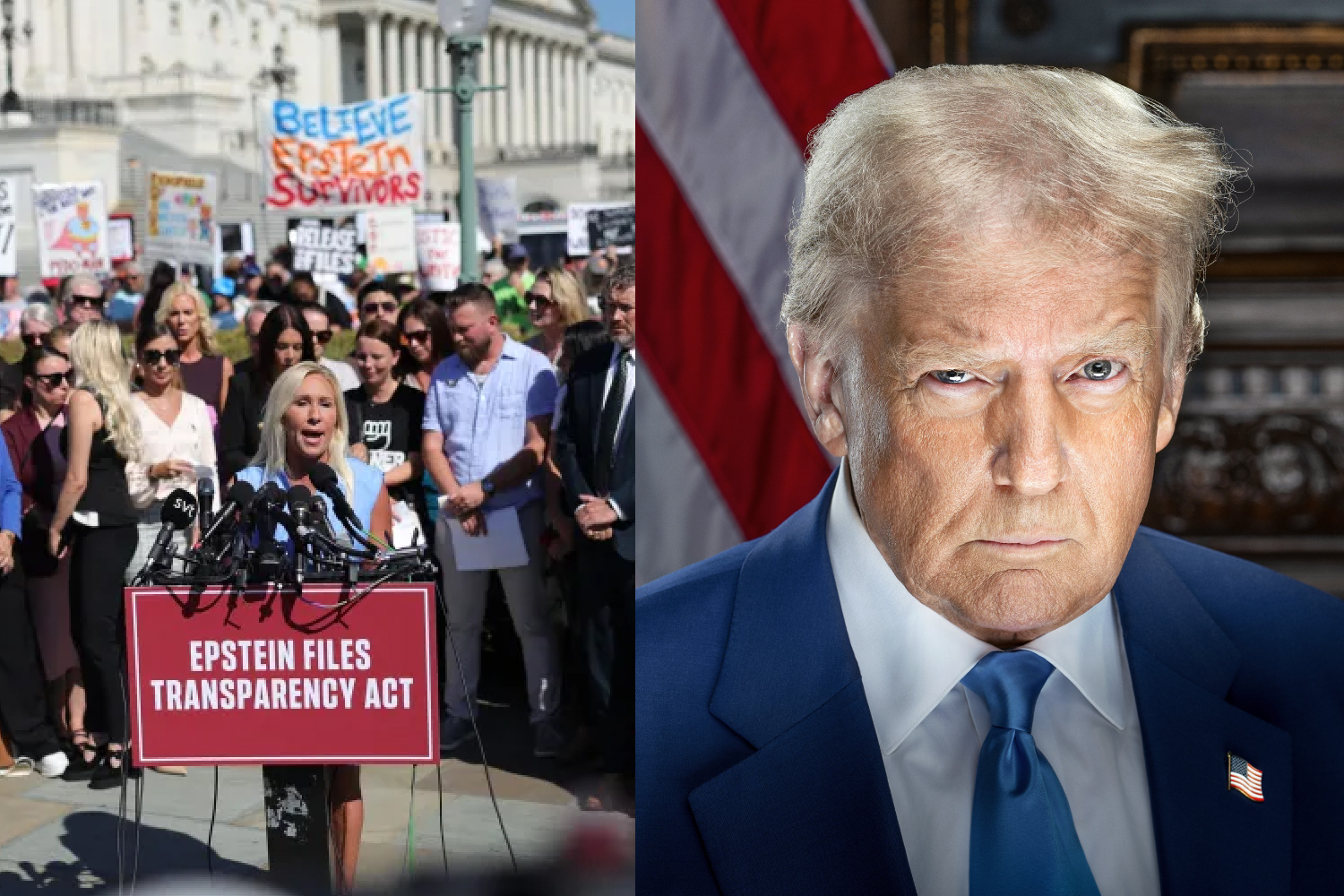
The debate over the Epstein files has taken a dramatic turn, as President Donald Trump abruptly shifted his stance and announced he would support a congressional measure requiring the full release of documents connected to Jeffrey Epstein.
In the introduction to this developing story, the Epstein files have moved from a behind-the-scenes political fight to a nationally watched showdown that Trump ultimately decided he could not win.
Trump’s Decision and the Political Cost
According to officials familiar with the discussions, the president’s reversal came only after advisers warned him that opposing the release would almost certainly lead to a humiliating defeat on the House floor. With bipartisan support building in Congress, the momentum behind the measure became too strong for the White House to stop.
At the heart of Trump’s shift was a recognition that the political cost of continuing to fight the release of the Epstein files was rising by the day. Allies and senior advisers reportedly told him that House Republicans were breaking ranks, making it nearly impossible to kill the measure.
Just days earlier, the White House had been applying pressure behind closed doors, urging a small group of Republican lawmakers to abandon their support. Those efforts failed, and Trump began privately expressing frustration as the number of GOP defections grew.
By Sunday evening, the message had become clear. The battle over the Epstein files was no longer winnable. The president decided his best option was to reverse course quickly and try to present the move as a strategic choice rather than a forced retreat.
Although Trump publicly announced his support for the measure, sources say he remains deeply unhappy about the situation. He has long viewed any renewed focus on Epstein as politically distracting, unfair, and damaging to his agenda.
The Epstein files have resurfaced several times during his presidency, and each time they have generated public speculation and political attacks that the White House has struggled to contain.
Trump has insisted he cut ties with Epstein long before the financier was charged with any crimes. Still, he has grown irritated that some of his own allies played central roles in pushing the House measure forward.
That irritation was evident when Trump lashed out at Rep. Marjorie Taylor Greene, withdrawing his endorsement and calling her a traitor after she championed the bill. Two days later, he reversed his position entirely. Advisers say it was a sign of how quickly political pressure had reshaped the president’s calculations.

People familiar with the internal conversations describe Trump’s support for the measure as a tactical pivot. By embracing the release of the Epstein files, the White House hopes to move the debate out of the spotlight and direct voters’ attention back to policy accomplishments.
Republican leaders are publicly signaling the same. House Speaker Mike Johnson, who previously opposed the measure, hinted he may now vote for it, expressing confidence that the Senate will address concerns about the bill’s wording.
The administration has also attempted to turn the Epstein conversation toward political opponents. Trump recently ordered a Justice Department investigation into Epstein’s connections with several public figures, including former President Bill Clinton and economic adviser Larry Summers. White House officials have used the move to argue that Trump supports full transparency.
Even with Trump’s endorsement, the process is far from over. While the House is expected to pass the measure with overwhelming support, the Senate may not take it up until December.
Senate Majority Leader John Thune has not committed to bringing the measure forward immediately, creating a window the administration hopes to use to shift the national conversation.
Still, political strategists say the Epstein files are unlikely to disappear entirely. Conspiracy theories tend to linger, and public curiosity over the contents of the files remains strong.
The political storm surrounding the Epstein files forced Trump into a rare retreat, but the debate is far from finished. As Congress moves forward, the administration will continue working to redirect attention toward policy issues. Whether that effort succeeds will depend on how the coming weeks unfold, and whether the release of the Epstein files reignites public scrutiny or finally closes a long running chapter.