A major security alarm rang across Europe after reports that a Polish train track was destroyed in an act of sabotage, disrupting part of a crucial rail corridor that helps deliver aid to Ukraine. The incident, which Polish officials described as deliberate and unprecedented, has added fresh tension to a continent already on alert over hybrid threats and foreign interference.
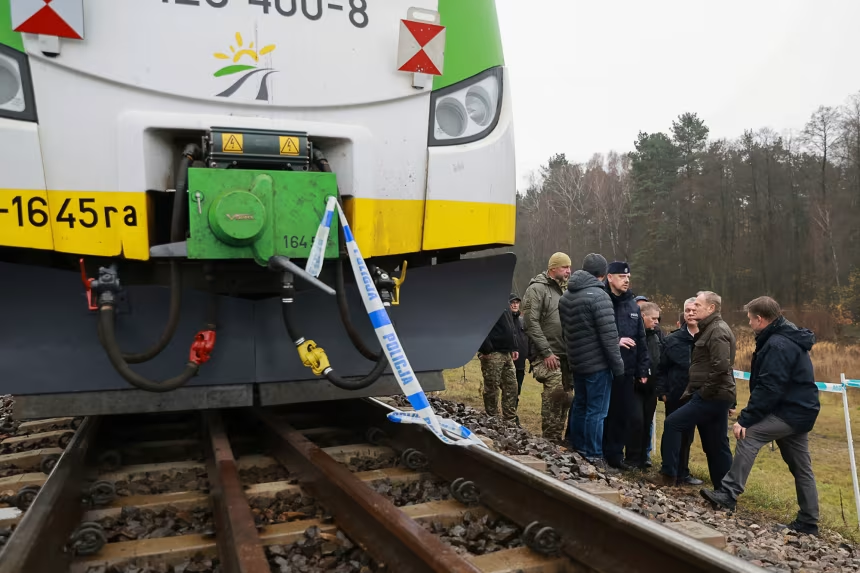
The blast struck the Warsaw to Lublin railway route, a line often used to move humanitarian supplies and military equipment toward the Ukrainian border. According to Prime Minister Donald Tusk, an explosive device was detonated along the track, tearing up a section of rail and forcing immediate suspension of operations.
Tusk called the sabotage a direct attempt to undermine the security of the Polish state. While no injuries were reported, the fact that the attack targeted a strategic aid route has heightened the seriousness of the situation.
Officials later discovered damage at another point along the same route, where electrical cables appeared to have been cut. Authorities believe one incident was unquestionably sabotage and the second is highly likely to be connected.
For nearly three years, Poland has served as one of Ukraine’s most dependable logistical hubs. Much of the international assistance that reaches Ukraine, from medical supplies to heavy weaponry, passes through Polish territory. Any disruption to these routes risks slowing the delivery of essential equipment to the frontlines.
The Warsaw–Lublin corridor is especially vital because it links directly to railway pathways near the Ukrainian border. Damaging this line not only interrupts transport but also sends a symbolic message meant to unsettle European support for Kyiv.
Poland wasted no time in treating the explosion as a national security threat. Investigators from the Internal Security Agency, national police, railway specialists and the prosecutor’s office have been deployed to examine every affected section of track.
Military units were also sent to secure and inspect more than 100 kilometers of the route toward eastern Poland. Authorities are combing through evidence, analyzing fragments of the explosive device and reviewing surveillance footage from nearby areas.
Despite the severity of the incident, no suspects have been arrested yet. Officials have not publicly identified who they believe may be responsible.
European leaders quickly condemned the sabotage. The president of the European Commission warned that threats to the continent’s infrastructure are real and increasing, urging member states to strengthen protection over airspace, energy networks and transport systems.
Estonia’s prime minister expressed full solidarity with Poland, calling for a united response to hostile acts targeting European Union and NATO members. Ukraine’s foreign minister also voiced support and suggested the incident could be another hybrid attack designed to test allied reactions.
Security analysts have long warned that foreign intelligence agencies may be attempting to destabilize European states through covert operations. Recent research indicates a broader pattern of sabotage across the continent, including damage to undersea cables, attacks on communications towers and cases of arson linked to foreign operatives.
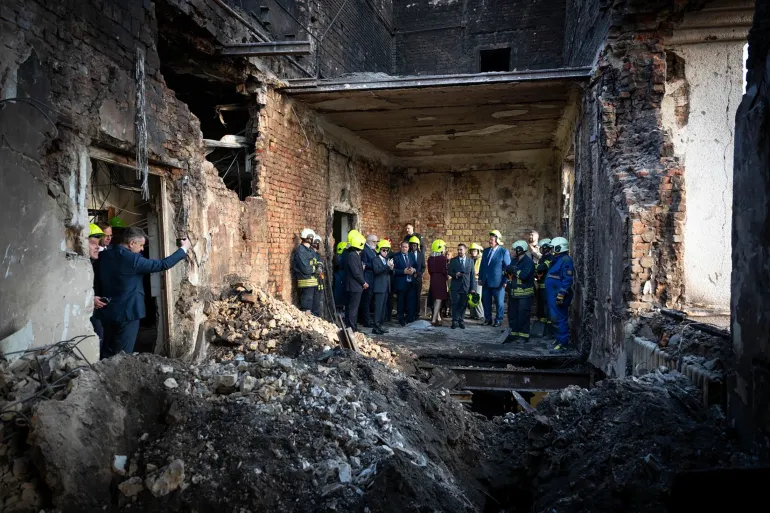
Poland has faced several suspicious incidents in recent years. Last year, a massive shopping center fire in Warsaw was later determined to be arson commissioned by a foreign intelligence service. Officials say such acts are designed to create social panic, undermine trust in public institutions and stretch emergency resources.
Still, some Polish leaders caution against assigning responsibility too quickly. While Russia is often suspected in cases involving sabotage or disruption, officials note that not every incident is necessarily linked to Moscow. Even so, they acknowledge that foreign involvement cannot be ruled out.
The Polish train track destroyed in act of sabotage is more than an isolated incident. It highlights how vulnerable Europe’s critical infrastructure has become at a time of war, political tension and escalating hybrid threats. As Poland works to identify the perpetrators, the attack serves as a reminder that protecting transport networks is now an essential part of maintaining support for Ukraine and safeguarding regional stability.