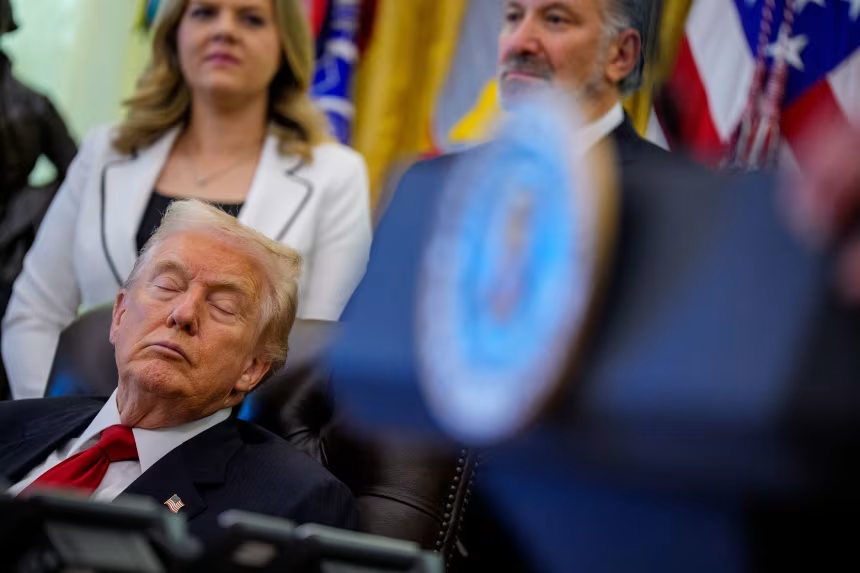
Photos of President Donald Trump closing his eyes during an Oval Office event this week have captured global attention. These moments, seen by many as nodding or drifting into a brief rest, spread quickly across social platforms and revived questions about the president’s alertness and energy at public events.
During a recent White House announcement on drug pricing, onlookers noted that Trump appeared to struggle with staying attentive, his eyelids drooped, his head tilted and he seemed to briefly close his eyes as aides and press members delivered remarks.
Video analysis suggests that for roughly 20 minutes, he exhibited behaviors commonly associated with fighting sleep in a meeting setting.
Images and clips from the event circulated rapidly on X (formerly Twitter), Reddit and other sites. Memes followed within hours, including one by California Governor Gavin Newsom that dubbed him “The Nodfather,” a play on the classic movie and a jab at what many perceived as nodding off.
This isn’t the first time Trump’s comportment at public events has been scrutinized. Social media and media outlets previously flagged moments when his eyes appeared closed or his posture seemed lethargic.
For example, during a previous event, a photo of Trump with eyes shut during a prayer at the Republican National Convention was fact checked as merely a moment of reflection, though it still sparked commentary.
The latest occurrence adds fuel to broader discussions about presidential stamina, especially as Trump frequently used nicknames and critiques about age and energy when targeting opponents.
The White House denied that Trump was sleeping or incapacitated. A spokesperson emphasized that he led the event actively, answered questions from reporters and delivered remarks on behalf of the administration. They described the fluctuations in his posture as normal for long sessions.
Still, the nature of the event, during which an attendee collapsed behind Trump, heightened the sense of alarm for some observers. The combination of visual cues, the collapse incident and the viral imagery created a cascade of public reaction.
Even small gestures matter when you hold the highest office. The images of Trump closing his eyes may not predict policy outcomes, but they shape public perceptions of leadership, attentiveness and physical stamina.
In a 24 hour news cycle, these visuals often become shorthand for much broader assessments: Is the president up to the job?
Can he handle long days, global diplomacy and crises? These underlying questions drive both media commentary and public debate.
Additionally, when visuals like these trend online, they become political tools. Critics highlight them as evidence of fatigue or decline, while supporters dismiss them as harmless or over interpreted. Either way, the images already touched a nerve.
The spread of these photos points to how social media amplifies and weaponizes visual details. A fleeting moment, eyes closed for seconds, can transform into a narrative about capability, leadership and trust.
For the media and political watchers, this moment may signal a shifting terrain where posture, alertness and visual presentation increasingly influence how leaders are perceived. In an era of deep factional divides, visuals become shorthand for loyalty or criticism.
For the president’s team, it raises internal concerns: how to manage optics, how to present unwavering energy and how to avoid small moments being interpreted as vulnerabilities.
When viewers see Trump closing his eyes, they see more than a blink, they see a symbol. That symbol carries weight in today’s polarized climate where every gesture is scrutinized and every image can become a meme.
While the president certainly delivered speeches and answered questions during the event, the viral photos serve as a reminder that in modern politics, optics matter as much as substance.