In a historic yet emotional announcement, Nancy Pelosi announces she will not seek reelection after nearly four decades in Congress.
The 85-year-old lawmaker, who shattered glass ceilings as the first and only female Speaker of the U.S. House of Representatives, shared her decision through a heartfelt video message to her constituents in San Francisco.
Her statement marked the end of a remarkable political era defined by discipline, resilience, and groundbreaking leadership within the Democratic Party.
Pelosi’s announcement came as both a reflection and a farewell. “I have truly loved serving as your voice in Congress,” she said, expressing gratitude to her hometown of San Francisco, which she has represented since 1987. Her parting message urged her city to “know your power” and continue shaping the nation’s democratic ideals.
For nearly 40 years, Pelosi has been at the center of American politics, steering her party through some of its most turbulent times.
From the Iraq War debates to the Affordable Care Act and two impeachments of former President Donald Trump, Pelosi’s tenure has left an indelible mark on legislative history. Her mastery of political negotiation and her command over the House Democratic caucus made her one of the most formidable figures in modern governance.
Born and raised in Baltimore’s Little Italy neighborhood, Pelosi grew up surrounded by politics. Her father, Thomas D’Alesandro Jr., was a U.S. congressman and later the city’s mayor. This environment nurtured her sharp instincts and strategic mindset, qualities that would later define her rise in Washington.
After being elected in 1987, Pelosi quickly earned a reputation as a skilled vote counter and fearless advocate. She made history in 2007 when she became the first woman to hold the Speaker’s gavel.
Over the years, she used her position to advance major Democratic initiatives, including the Affordable Care Act and economic recovery packages during the Obama and Biden administrations.
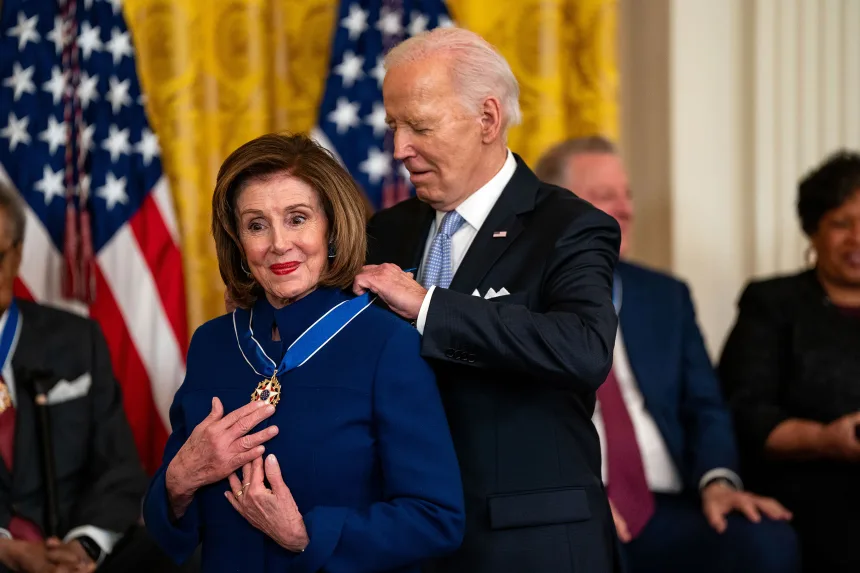
Even her critics acknowledged her effectiveness. Pelosi maintained near-total control of her caucus, rarely losing a vote and keeping her party unified through internal divisions and political storms.
Pelosi’s leadership was marked by both triumph and tension. During Trump’s presidency, she became his most visible political adversary.
Their strained relationship culminated in a viral moment in 2020 when she tore up Trump’s State of the Union speech on live television.
Beyond her political showdowns, Pelosi was instrumental in landmark legislation and historic moments. She led Congress through two impeachments of Trump and guided the passage of several pandemic relief bills under President Biden.
Her tenure also saw her navigate deep political polarization, often serving as a stabilizing force within the Democratic Party.
Despite her strong leadership, Pelosi was not immune to personal challenges. In 2022, her husband, Paul Pelosi, was violently attacked in their San Francisco home—a moment that brought national attention to the rise in political violence. She later admitted that the incident influenced her decision to step back from leadership roles.
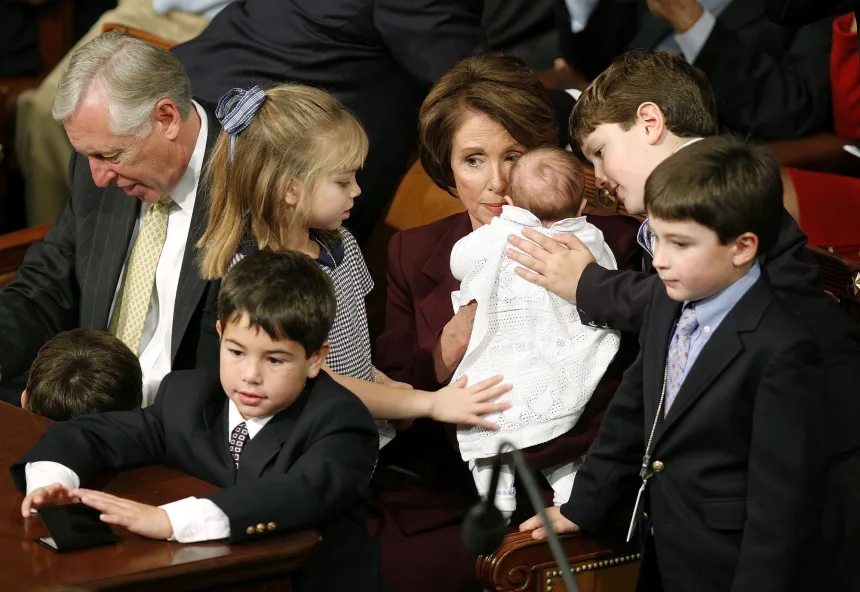
Pelosi’s impact extends far beyond policy. She paved the way for generations of women in politics and became a symbol of what perseverance and strategic intelligence can achieve in a male-dominated arena. “If you’re effective as a woman, they have to undermine you,” she once told CNN, reflecting on her decades of experience. “But you don’t run away from the fight.”
Her ability to blend empathy with authority earned her both admiration and criticism. Yet, even those who opposed her politically often recognized her as one of the most capable Speakers in U.S. history.
As Nancy Pelosi announces she will not seek reelection, her departure marks the end of a transformative chapter in American politics.
Though she will no longer serve in Congress, her influence will continue to shape Democratic strategy and leadership for years to come. Pelosi leaves behind a legacy defined by firsts , the first female Speaker, the first to reclaim the gavel after losing it, and one of the few lawmakers whose career spanned seven presidents.
Her exit serves as a reminder that political leadership is about more than power; it’s about persistence, conviction, and the courage to lead even when the odds are against you.