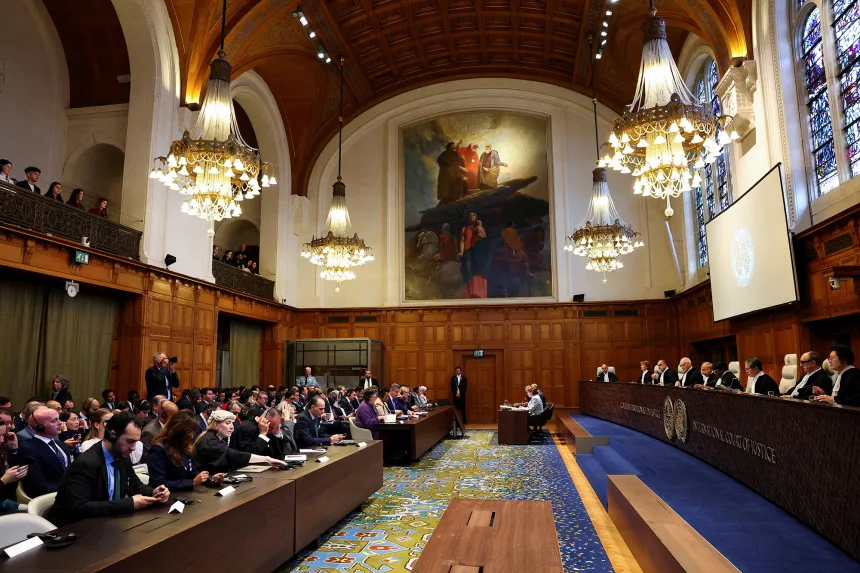
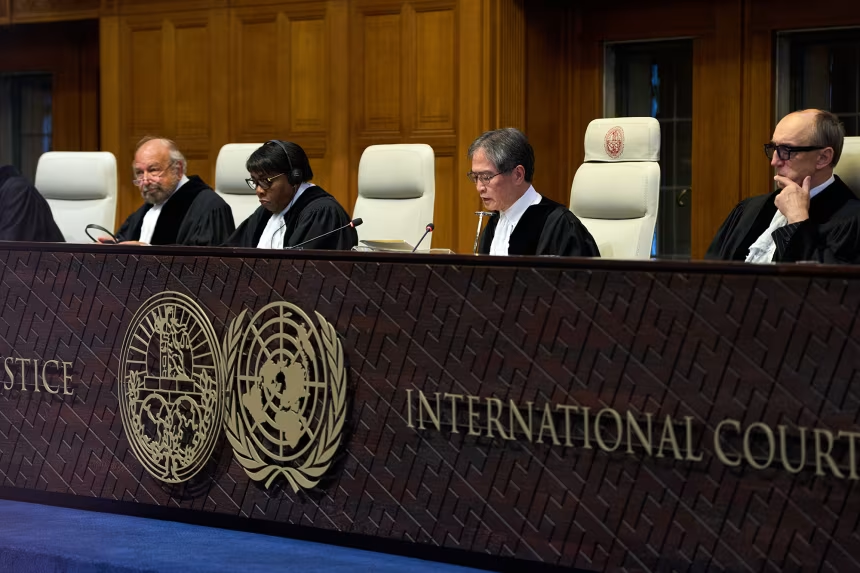
In a significant diplomatic development, the UN’s top court rebukes Israel over Gaza aid restrictions, accusing the country of failing to allow sufficient humanitarian access during its ongoing war with Hamas. The International Court of Justice (ICJ), based in The Hague, issued a strongly worded statement emphasizing Israel’s legal obligation to ensure that essential aid, including food, water, and medical supplies, reaches civilians in Gaza without obstruction.
This ruling has sparked worldwide discussion about humanitarian accountability during wartime and the responsibilities of occupying powers under international law.
The ICJ’s decision came after months of appeals from humanitarian organizations documenting dire living conditions in Gaza. The court’s panel of judges noted that the restrictions on aid delivery have worsened an already catastrophic situation for civilians trapped in the enclave.
According to the ICJ, the Israeli government must “take all necessary and effective measures” to ensure that humanitarian assistance can flow freely into Gaza. This includes reopening border crossings, facilitating the work of aid agencies, and ensuring that military operations do not impede relief efforts.
Legal experts say the ruling reinforces long-standing principles of international humanitarian law, which require all parties in a conflict to protect civilians and allow aid to reach them. While the court’s decisions are binding, it lacks enforcement mechanisms, meaning compliance depends largely on political pressure and international diplomacy.
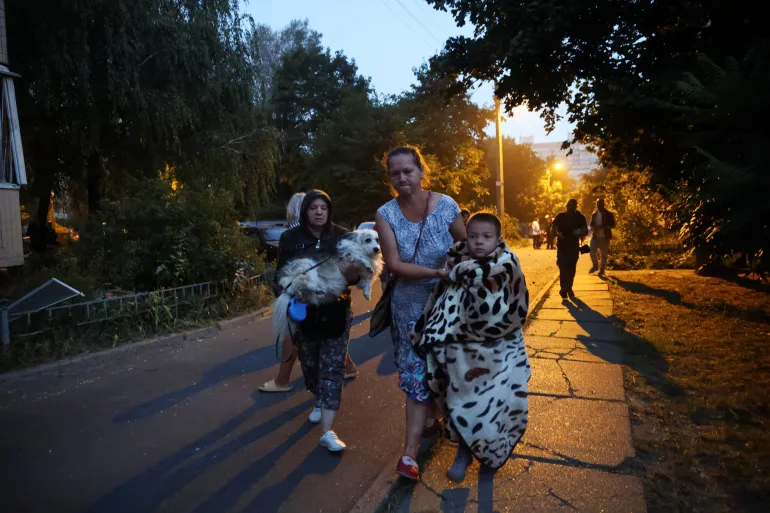
The humanitarian toll in Gaza has reached alarming levels. The United Nations estimates that millions of residents are facing acute shortages of food, clean water, and medical care. Hospitals have been overwhelmed, electricity supplies remain erratic, and sanitation systems have collapsed in several areas.
Aid organizations such as the World Food Programme and Doctors Without Borders have repeatedly warned that restrictions on border crossings have crippled their ability to deliver life-saving assistance. Convoys carrying food and medicine have been delayed or turned back, often citing security concerns.
The UN’s top court rebukes Israel over Gaza aid restrictions not only underscores the severity of the crisis but also puts renewed international attention on the humanitarian cost of the conflict.
Israeli officials have defended their actions, arguing that security measures are necessary to prevent Hamas from diverting humanitarian supplies for military purposes. They claim that aid convoys are often exploited by militants to smuggle weapons or materials used for attacks against Israel.
However, the ICJ and several humanitarian groups argue that while security is a legitimate concern, it cannot justify widespread civilian suffering. They contend that Israel, as a power exercising control over Gaza’s borders, holds a moral and legal responsibility to ensure that basic needs are met.
In response to the ICJ’s decision, Israel has expressed disappointment but insists it will continue balancing humanitarian needs with national security imperatives. Analysts note that while the ruling may not immediately change on-the-ground realities, it adds pressure on Israel to modify its approach.
The UN’s top court rebukes Israel over Gaza aid restrictions has triggered strong international reactions. Several European and Middle Eastern nations have echoed the court’s concerns, urging Israel to comply with the ruling and calling for a ceasefire to facilitate aid delivery.
The United States, Israel’s closest ally, responded cautiously. Washington reiterated Israel’s right to defend itself but also emphasized the need to avoid collective punishment of civilians. Meanwhile, humanitarian groups welcomed the ICJ’s intervention as a crucial step toward accountability.
Some experts see the ruling as part of a broader effort by international institutions to address wartime conduct in Gaza. It may also set the stage for future legal challenges if evidence of systematic obstruction of aid is presented.
The ICJ’s rebuke highlights a persistent question: how effective are international courts in influencing the actions of powerful states during conflicts? While symbolic, such rulings serve as moral benchmarks, reminding the global community that humanitarian obligations are not optional.
If Israel ignores the court’s directives, it risks further isolation and reputational damage. Conversely, partial compliance could pave the way for renewed diplomatic engagement and reduced tension with aid organizations.
The decision also sends a broader message to other nations engaged in conflict — that restricting humanitarian aid violates not just law, but shared human values.
The UN’s top court rebukes Israel over Gaza aid restrictions marks a pivotal moment in the global debate over humanitarian access and accountability during wartime. While the ICJ lacks direct enforcement power, its decision amplifies the moral and political pressure on Israel to ease restrictions and prioritize civilian welfare.
Whether this ruling leads to tangible changes remains uncertain. Yet, it has reinforced an essential truth: in any conflict, the protection of human life must remain paramount.