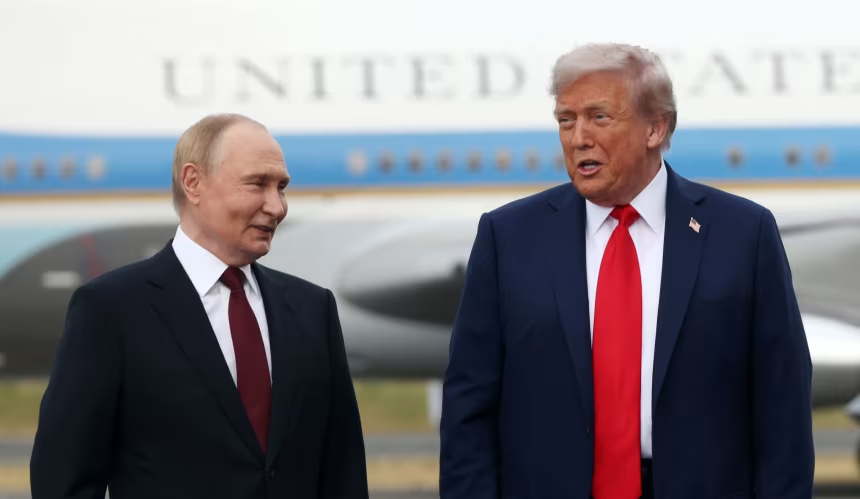
President Donald Trump’s ambition for a second summit with Putin emerged as a bold gambit following their August meeting in Alaska. He promised a rapid follow-up session to deepen U.S.-Russia engagement and pursue peace in Ukraine. Yet in recent days the plan has clearly stalled, revealing cracks in preparation and political alignment.
After the Alaska summit, Trump indicated he would meet Vladimir Putin again “within two weeks or so.” Analysts interpreted this as an effort to sustain momentum and signal diplomatic renewal. The proposed location Budapest added symbolic weight, but the groundwork quickly ran into trouble.
A key preparatory meeting between U.S. Secretary of State Marco Rubio and Russian Foreign Minister Sergei Lavrov was put on hold, undermining the summit timeline. The Kremlin publicly noted that “no understanding” of dates existed, stressing the need for “serious preparation.” The White House confirmed there are currently “no plans” for a meeting in the immediate future.
Behind the scenes, U.S. and Russian priorities diverged. Trump initially floated a cease-fire along existing combat lines in Ukraine, but Russia reiterated it would not shift its position. These mismatched expectations stalled the summit’s potential agenda and highlighted the gap between bold intent and realistic diplomacy.
For Trump, the stalled summit harms his image as a deal-maker on the world stage. Having publicly committed to a quick follow-up with Putin, the delay now leaves him vulnerable to criticism that diplomatic ambition outpaced concrete planning.
Europe and Ukraine watched closely. A swift summit promised progress on the war effort and expressed U.S. engagement with Moscow. Yet without substance, the delay raises concerns among Western allies about whether Washington is synchronised with Europe and Kyiv on strategy.
From Moscow’s perspective, delaying the summit charges Russia with discipline imposing conditions and holding the initiative. Russia’s refusal to commit to Trump’s timeline underlines its leverage and exposes the difficulties of brokering high-stakes diplomacy when each side measures different objectives.
The collapse of the second summit with Putin plan highlights the gulf between diplomatic aspiration and messy reality. For Trump to recover credibility, he must show a clear agenda, align interests with key partners, and respect the disciplined planning required for such high-level meetings. Without structural clarity, future talk of major summits may sound impressive but lack the substance needed to shift geopolitics.
The stalling of this follow-up meeting is not simply a scheduling hiccup it serves as a signal that in diplomacy, momentum alone cannot replace preparation, clarity of objectives, and readiness on both sides.