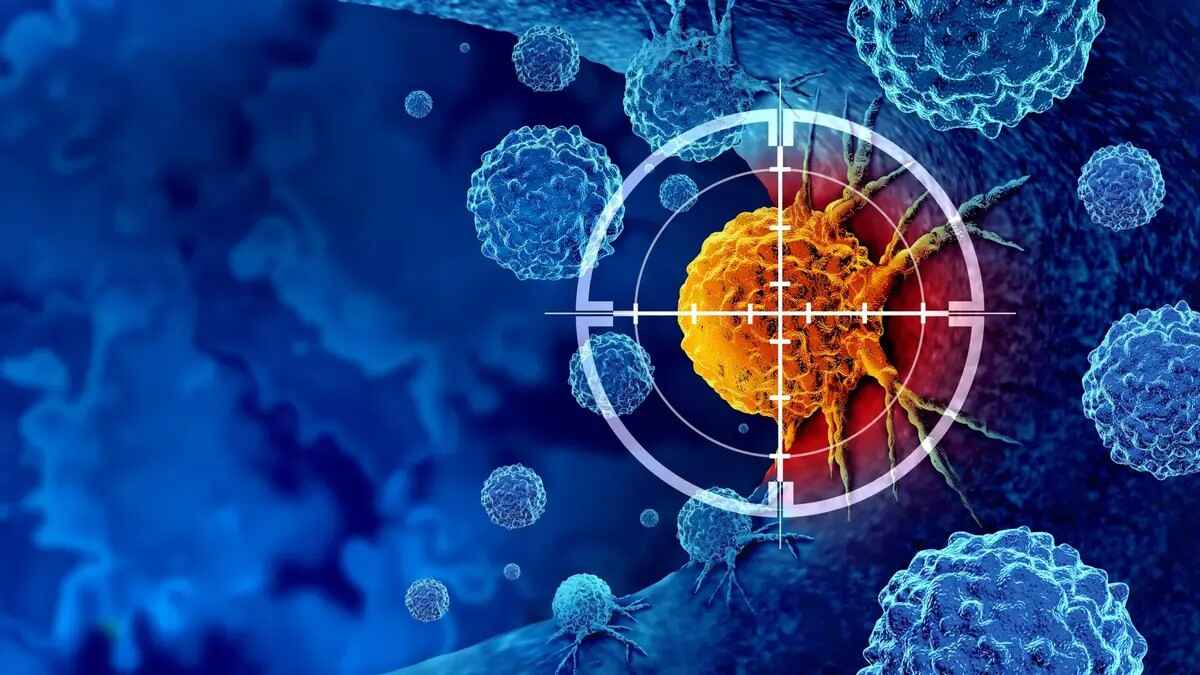
According to reports, scientists have found a new way to stop cancer growth without harming healthy cells. The researchers from the Francis Crick Institute and Vividion Therapeutics discovered a group of chemical compounds that blocks the signal informing cancer cells to grow and divide.
The mechanism of the therapy is that the discovered chemical compounds have the potential to precisely prevent the cancer-driving gene RAS from interacting with a key pathway responsible for tumor growth.
The RAS gene plays an integral role in controlling how cells grow and divide, but mutations in this gene occur in roughly one in five cancers. When it gets mutated, RAS becomes permanently active, continually sending signals that push cells to keep growing and multiplying.
Inside the cell, the RAS gene sits on the membrane and acts as the starting signal in a chain of growth processes. Targeting RAS signaling pathways is often difficult because they are essential for normal cell function, and their complete inhibition can disrupt other vital processes. For instance, completely blocking one of the enzymes linked to RAS, called PI3Kα, can interfere with insulin signaling, leading to high blood sugar levels (hyperglycemia) as a side effect.
In the study published in the Science journal, the researchers used a combination of chemical screening and biological testing to identify compounds that stop the interaction between RAS and PI3Kα without obstructing normal cell activity.
After carrying out several assays, the researchers confirmed that these compounds successfully blocked the RAS-PI3Kα interaction but still allowed PI3Kα to perform its other roles, including those related to insulin signaling. Thereafter, they tested the compounds in mice with RAS-mutated lung tumors. Upon physical examination, the therapy stopped tumor growth, and the researchers found no signs of elevated blood sugar levels.
Furthermore, they tried combining the new compounds with one or two additional drugs that target enzymes within the same pathway. In the end, the therapy produced stronger and longer-lasting tumor suppression than any of the drugs used alone.
Meanwhile, the potential treatment is now moving into its first human clinical trial. If proven safe and effective, this therapy could become a way to treat a wide range of cancers while minimizing harm to healthy cells.