In the most recent U.S. military operation near Alaska, fighter jets scrambled to intercept Russian warplanes operating near the Alaskan Air Defense Identification Zone (ADIZ). The North American Aerospace Defense Command (NORAD) confirmed that two Tu-95 strategic bombers and two Su-35 fighters entered the zone, prompting a response from U.S. and allied aircraft. Although the Russian planes stayed in international airspace and did not cross into American or Canadian sovereign airspace, the incident underscores growing strategic tension between Washington and Moscow in the Arctic region.
This latest interception marks at least the ninth such encounter this year, consistent with a pattern of Russian aircraft probing Western air defenses. Military analysts observe that the U.S. fighter jets intercept Russian warplanes near Alaska episodes illustrate how both sides are sharpening readiness, sending messages, and contesting influence in high-latitude airspace.
NORAD detected the Russian aircraft in the Alaska ADIZ and responded by scrambling nine U.S. assets, including four F-16 fighters, an E-3 airborne command plane, and four KC-135 tanker aircraft. The interceptors tracked and visually identified the Russian Tu-95 “Bear” bombers and Su-35 “Flanker” fighters, ensuring they remained in international airspace. Officials described the intercept as “routine” but emphasized that vigilance remains essential.
The ADIZ is not sovereign territory; rather, it is a buffer where foreign aircraft are expected to identify themselves. Russia did not enter U.S. or Canadian territory, but analysts note that repeated activity of this kind tests radar coverage, response speed, and command coordination. It is also the third such encounter in just a month, suggesting an escalating pattern.
Strategists argue that these flights serve multiple purposes. They can measure U.S. reaction times, test rules of engagement, gather electronic intelligence, and send symbolic messages about Russia’s reach in the Arctic. By operating strategic bombers with fighter escorts, Moscow reminds Washington that its long-range capabilities remain intact despite economic sanctions and battlefield pressures elsewhere.
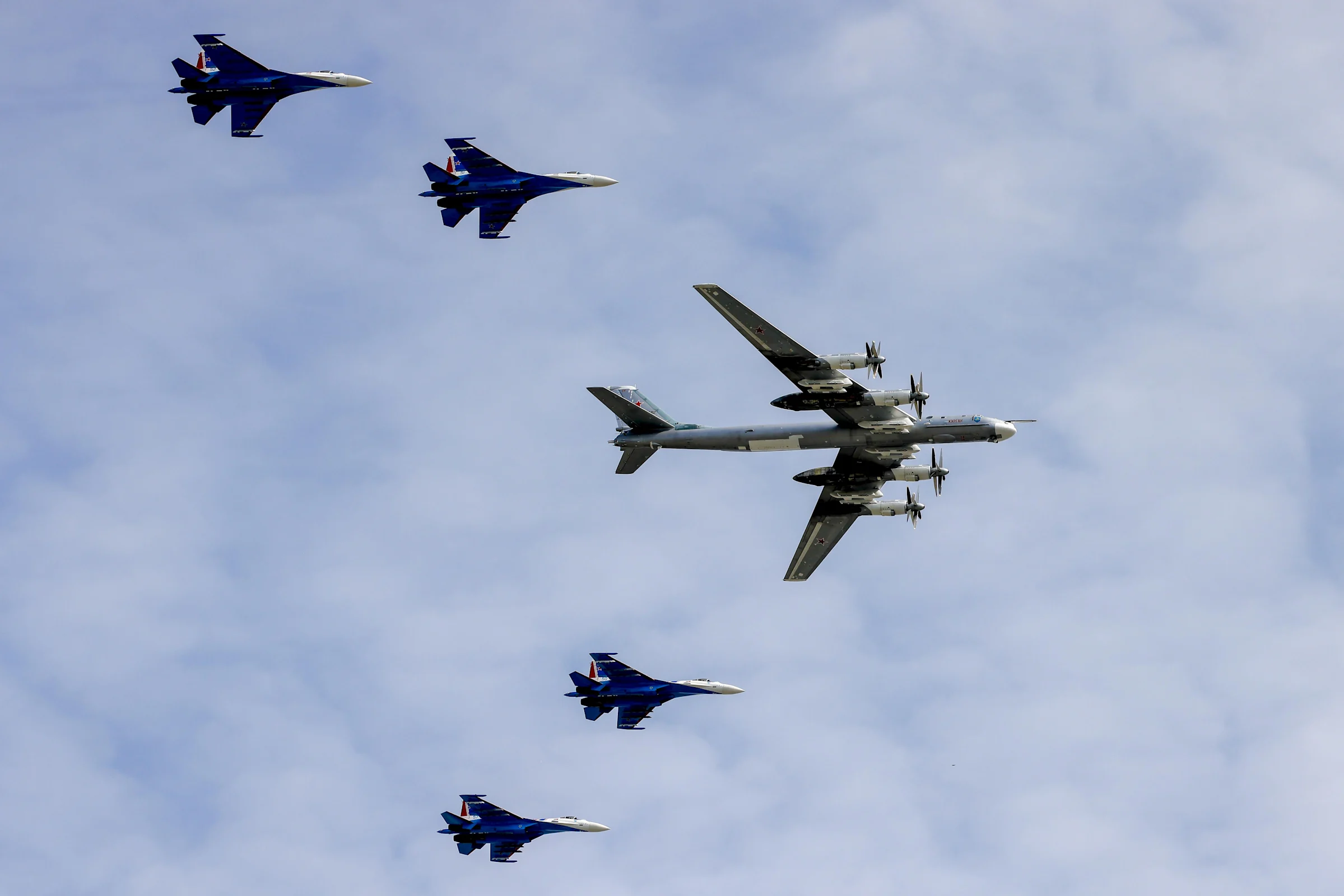
The encounters where U.S. fighter jets intercept Russian warplanes near Alaska send clear signals. Russia wants to demonstrate that it can project power across the Arctic, while the U.S. replies by showing its rapid readiness to intercept any approach. The back-and-forth creates a predictable but tense rhythm.
The risks, however, are significant. Miscommunication, a malfunction, or a miscalculated maneuver could spark a crisis. Even though the flights occur in international airspace, a near-miss or accident could quickly escalate into a diplomatic or military incident. Analysts recall that during the Cold War, several aerial encounters nearly spiraled out of control.
The Arctic is becoming more strategically valuable as melting ice opens shipping lanes and exposes natural resources. Control of air and sea approaches through the region is drawing greater attention from both Washington and Moscow. For the U.S., these repeated Russian flights create financial and operational strain: maintaining fighter readiness, forward bases, and radar coverage in the Arctic requires heavy investment.
Diplomatically, the flights challenge U.S. leadership in NATO and the Arctic Council. Allies may push for greater joint exercises, more integrated radar systems, and increased investment in northern defense infrastructure. In turn, Moscow may respond with further patrols or demonstrations of new bomber capabilities, keeping the pressure high.
Recent Intercepts:
2025 (so far): Nine Russian aircraft intercepts near Alaska, including multiple bomber formations.
2024: Roughly a dozen similar incidents recorded, showing steady Russian activity.
Cold War precedent: Dozens of interceptions occurred annually as both sides probed defenses.
The Alaska ADIZ was established during the Cold War to extend U.S. early warning defenses.
Not sovereign airspace, but foreign aircraft are expected to declare identity.
Covers a vast Arctic zone critical for detecting long-range bombers and missiles.
The latest interception, in which U.S. fighter jets intercept Russian warplanes near Alaska, may not have breached sovereign airspace but underscores deepening tensions in the Arctic. These repeated flights illustrate Russia’s intent to project power and test defenses, while the U.S. demonstrates deterrence and vigilance.
As both sides expand military presence in the north, the potential for miscalculation grows. What remains uncertain is whether diplomacy will keep pace with these increasingly frequent encounters—or whether one incident could ignite a broader confrontation in one of the world’s most strategically sensitive regions.