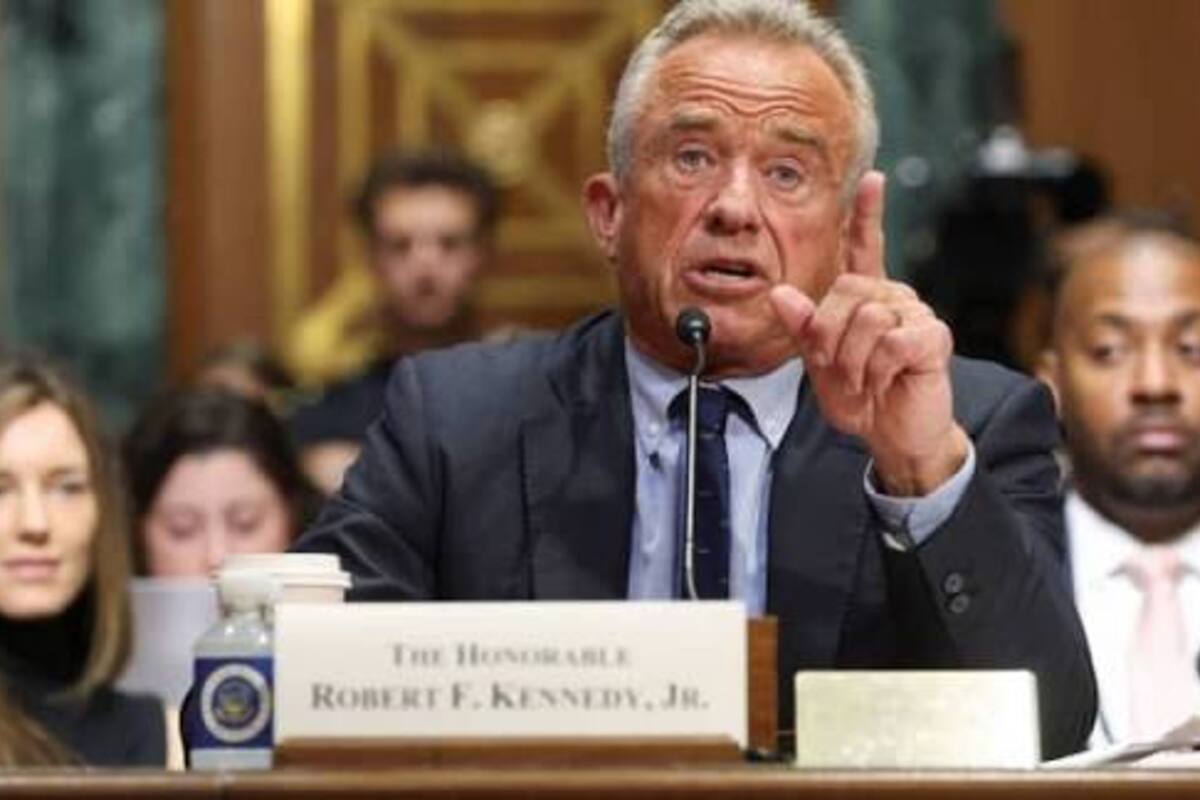
As Robert F. Kennedy Jr. takes charge as U.S. Health and Human Services Secretary, communities across the country are reexamining whether to continue adding fluoride to their drinking water including in Michigan, the very state where water fluoridation first began.

Fluoridation has long been seen as one of America’s major public-health achievements. It was first tested in Grand Rapids, Michigan, in 1945, and eventually adopted by many U.S. cities, helping reduce tooth decay dramatically over decades. However, the current federal leadership under Kennedy has signaled a shift. Kennedy has described fluoride as “industrial waste” and expressed support for ending mandatory community water fluoridation.
That shift appears to be influencing state and local policy. Just 15 months after receiving an award for excellence in fluoridation, the city of Grayling, Michigan, voted unanimously in May to end its long-running water treatment program. Equipment was shut off, and fluoride supplies returned unopened. City officials cited the principle of personal choice: they argued that residents who want fluoride can get it through toothpaste or dental treatment instead of being forced to have it added to their water.
The reaction in Michigan has been mixed. The Michigan Department of Environment, Great Lakes and Energy issued a statement in March affirming that recommended fluoride levels about 0.7 milligrams per liter are safe and beneficial, especially for children, older adults, the poor, and people with less access to dental care. Still, some communities are pausing fluoridation and say they are hesitant to restart because of uncertainty about the federal guidance.
Scientists warn that ending fluoridation could reverse gains in oral health. Dental school faculty say community water fluoride protects broad populations, including those least served by dental care systems, by reducing cavities. Without it, dental decay may increase, especially among vulnerable groups.
In Grayling, some residents didn’t even know the change had happened until weeks afterwards, because there was little public notification. As more states consider legislative action to roll back fluoridation policies, many Michiganders are watching closely. The question echoes beyond Michigan: how far will federal attitudes under RFK Jr.’s leadership reshape long-standing public health programs?