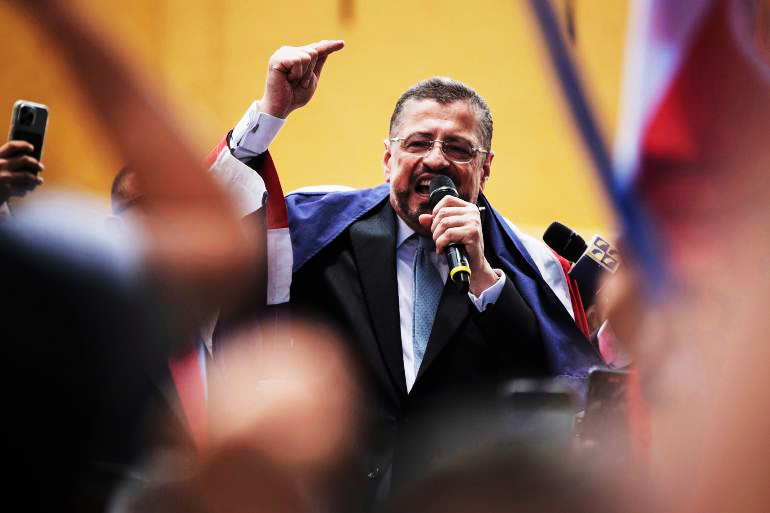
San José — Costa Rican President Rodrigo Chaves Robles has become the first sitting head of state in the country’s history to testify before a legislative committee weighing whether to strip him of immunity from prosecution.
The three-member panel convened Friday to determine whether Chaves Robles should retain protection from prosecution in connection with corruption allegations. If lawmakers ultimately vote to lift his immunity, the conservative leader could face a criminal trial.
Prosecutors allege Chaves Robles pressured an associate to divert $32,000 from a contract awarded by the Central American Bank for Economic Integration and use the funds to buy a house for his former presidential adviser, Federico Cruz. Witnesses include ex-communications minister Patricia Navarro and businessman Christian Bulgarelli. The bank said it conducted its own internal probe and turned its findings over to the attorney general.
Chaves Robles has denied wrongdoing and accused his opponents of weaponizing the justice system. “What we are experiencing has historic consequences,” he told the committee, calling the case a “judicial coup d’état.” Outside the Legislative Assembly, he told supporters that adversaries were trying to convince Costa Ricans he was a “scoundrel.”
His lawyer, Jose Miguel Villalobos, argued the charges fall short of the “minimum requirements” to justify removing presidential immunity. A supermajority vote in the Legislative Assembly is required for Chaves Robles to be stripped of his protection.
Chaves Robles, a former World Bank economist and finance minister, was elected in 2022 as a dark horse candidate representing the conservative Social Democratic Progress Party. His tenure has been marred by controversy, including earlier allegations of running a parallel campaign financing structure and multiple accusations of sexual harassment dating back to his World Bank years.
He cannot seek re-election in 2026, as Costa Rican law prohibits consecutive presidential terms. The next presidential election is scheduled for February 1, 2026, with Chaves Robles’s mandate ending in May of that year.
Source:Aljazeera